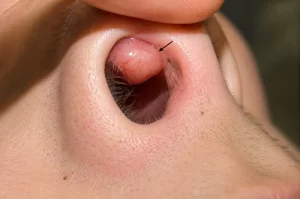
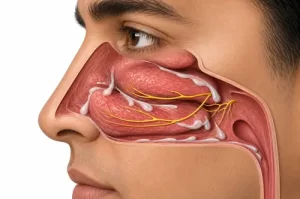
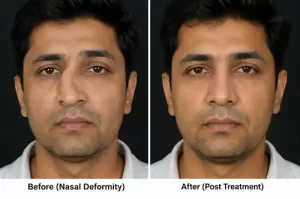
Nasal polyps are soft, painless growths that develop in the sinuses or nasal passages as a result of persistent inflammation. These growths are typically teardrop-shaped and can differ in size. Small polyps may not cause symptoms, while large or numerous polyps can obstruct the nasal passages and sinuses, leading to problems such as difficulty breathing and recurring infections.
People with sinusitis, allergies, asthma, or other inflammatory diseases often have nasal polyps. Nasal polyps are benign growths; however, they can interfere with normal bodily processes and cause major issues, including sleep problems. As a result, diagnosing and treating the issue is essential.
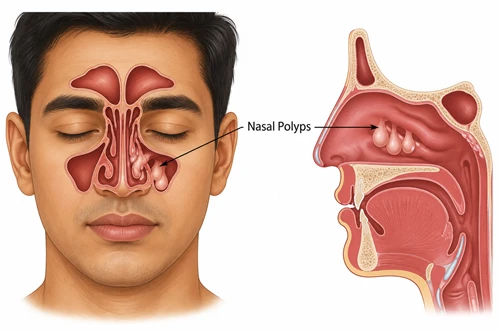
Nasal polyps appear when the nasal and sinus lining becomes inflamed for a long time.
Typical Causes/Risk Factors include:
Prolonged inflammation causes swelling of the nasal lining, leading to polyps.
The symptoms of nasal polyps can be subtle and easily mistaken for common sinus conditions.
Some Common Symptoms May Include:
Enlarged nasal polyps can significantly hinder breathing.
The types of nasal polyps depend on their site of origin and the causative factor.
It is important to know the type of nasal polyps to choose the best treatment options.
Proper diagnosis is necessary to assess the size and extent of nasal polyps.
Some Common Diagnostic Procedures Include:
The treatment approach is to alleviate symptoms, decrease inflammation, relieve blockages, and prevent recurrence.
When medication fails, surgery becomes necessary.
This surgery helps restore normal sinus function.
If treatment is not initiated promptly, various health issues may arise from nasal polyps.
Complications that may occur:
Early treatment will help avoid these problems.
Nasal polyps might reappear despite treatment. However, there are ways to avoid this situation.
Preventative Steps:
Follow-up care and preventive measures are required to prevent nasal polyps from recurring.
People with nasal polyps often have to live with the condition, which requires appropriate management for chronic cases.
Important Points for Living with Nasal Polyps:
Most people feel much better and breathe more easily after getting treated and monitored for their condition.
Last Updated: August 16, 2026
Likita ENT Hospital offers safe and effective Nasal Polyps Treatment in Patna, Bihar, India, at an affordable cost. Our team of experienced ENT specialists provides accurate nasal examination and diagnostic assessment to identify the presence, size, and extent of nasal polyps and evaluate their impact on breathing and sinus health. Treatment is tailored according to the size and location of the polyps, severity of symptoms, underlying sinus or allergy-related conditions, and individual patient needs, with appropriate care provided for children and adults. When required, our ENT specialists can manage associated nasal blockage, difficulty breathing, reduced sense of smell, recurrent sinus infections, nasal discharge, or chronic sinus inflammation and recommend suitable medical or surgical treatment, including endoscopic removal of nasal polyps when appropriate. With advanced ENT diagnostic facilities, experienced specialists, and a patient-focused approach, Likita ENT Hospital is committed to providing safe, precise, and comfortable Nasal Polyps Treatment in Patna, Bihar, India.