To prevent deadly consequences, breathing difficulties are an ENT emergency that needs to be identified and treated immediately. Breathing difficulty (or respiratory distress/airway obstruction) refers to the partial or complete blockage of air passing through the nose, throat, larynx, trachea, or airway passages. This can be sudden or occur slowly, depending on the cause, and can affect people of all ages.
The airway is vital for delivering oxygen to the lungs and for allowing us to breathe normally. Even a small airway blockage can be uncomfortable for patients, but a complete airway obstruction can be life-threatening. Some common symptoms of breathing difficulty may include: noisy breathing, wheezing, stridor, a choking sensation, difficulty speaking, rapid breathing, blue-colored lips, or severe respiratory distress.
Many ENT conditions cause airway obstruction and can result in breathing difficulty. The list of ENT conditions causing airway obstruction includes infections, allergic reactions, inhaled or swallowed foreign bodies, oversized tonsils and/or adenoids, paralysis of the vocal cords, a swollen larynx, tumors, trauma, congenitally malformed airway structures, or airway collapse during sleep (sleep apnea). In children, airway obstructions can rapidly become life-threatening due to the small nature of a child’s airway.
The goals of Emergency ENT management are to identify the cause of airway obstruction, restore adequate breathing and oxygen supply to the patient, prevent complications, and ultimately provide treatment to remedy the obstruction. Advanced airway evaluation technology, including endoscopy, imaging techniques, minimally invasive treatments, and ultimately surgical intervention, is utilized in modern ENT emergency departments.
Early assessment and management are key to ensuring patient airway safety and recovery from breathing difficulties.
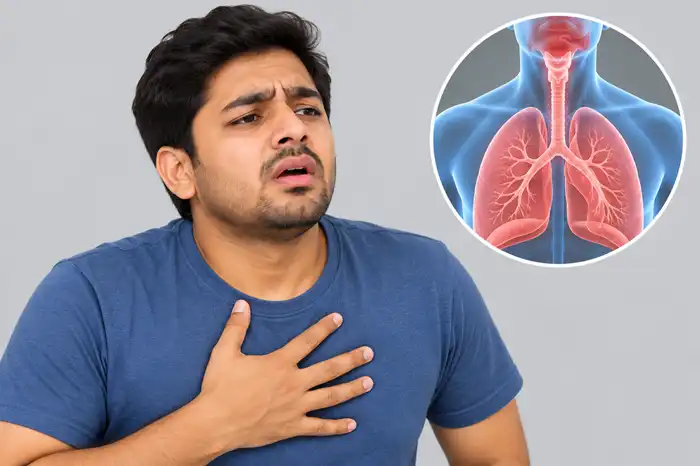
Trouble breathing that is caused by an obstruction of, or narrowing of, the airway.
Some of the main areas of the body that are involved include:
Any problem within these areas could obstruct airflow and cause breathing difficulty.
Typical Reasons for Breathing Problems
Breathing difficulties can result from a number of ENT-related conditions, including:
Some of these causes of breathing difficulty can be fatal without prompt life-saving intervention.
The severity of breathing difficulty varies depending on the extent of airway compromise.
The following are some signs of breathing difficulties:
Severe breathing difficulty can become life-threatening in minutes.
Immediate medical assessment should be performed when there is any suspicion of airway compromise.
Signs of an airway emergency include:
It is vital to establish the airway in the case of the previously mentioned signs of an airway emergency.
A detailed assessment should be performed immediately.
A comprehensive examination would involve:
Advanced airway assessment techniques enable appropriate identification and grading of airway compromise.
The cause and severity of the airway impairment determine the course of treatment.
Proper airway control and oxygen administration are crucial and often need to be initiated immediately.
Medical Administration:
Endoscopic examination allows the ENT specialist to evaluate and manage airway narrowing/blockage with precision.
Emergency airway endoscopy is the gold standard for removing inhaled foreign bodies.
Indications for surgical airway management are considered on a case-by-case basis, and the procedure may include:
Some patients may need airway surgery, such as:
The evolution of minimally invasive techniques for airway management helps maintain a higher level of safety and enhance recovery.
The underlying cause and any treatments used to ease breathing problems will determine how well a patient recovers.
Usually, post-treatment care consists of:
Patients with severe airway compromise are typically managed in intensive care, where they will be monitored until their breathing has normalized and they are safe to be discharged home.
The prognosis is significantly improved when a blocked airway is treated early.
Typical advantages of early intervention:
Early evaluation and management help achieve prompt and thorough airway recovery.
Breathing problems can be extremely serious and perhaps fatal if left untreated.
Possible Difficulties:
Early treatment can mitigate most of these potentially serious complications.
Long-term airway care and prevention rely on follow-up visits and continued vigilance.
Tips for maintaining long-term airway health:
Early diagnosis and consistent observation ensure proper airway health for the long term.
LIKITA ENT Hospital is a trusted ENT Centre for Breathing Difficulty Treatment in Patna, Bihar, India, providing specialized evaluation and treatment for airway obstruction, noisy breathing, vocal cord disorders, enlarged tonsils and adenoids, and other ENT-related breathing problems. Our ENT specialists focus on identifying the underlying cause, assessing airway function, and developing individualized treatment plans to address breathing difficulties. With comprehensive diagnostic evaluation, advanced endoscopic assessment, appropriate medical management, modern surgical techniques, and dedicated follow-up care, LIKITA ENT Hospital aims to help restore adequate airflow, improve breathing comfort, and reduce the risk of complications. Prompt evaluation is essential, particularly in emergencies involving severe breathing difficulty or suspected airway obstruction.