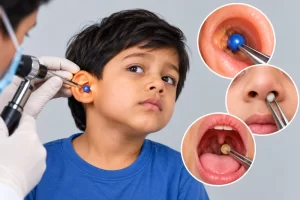
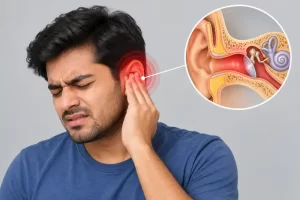
Ear bleeding is a serious ENT issue that requires immediate medical intervention, and to identify the underlying cause and avoid serious complications, early examination is essential. Bleeding from the ear may be a result of injury, trauma, infection, a ruptured eardrum, insertion of foreign objects, significant ear diseases, or, rarely, a skull fracture. While some causes involve simple, minor damage to the ear canal, others may indicate more complex injuries to the middle ear or head that require urgent attention. The sensitive organ responsible for hearing and balance is the ear. Bleeding from the ear should never be ignored, especially if it is accompanied by any hearing loss, dizziness, pain, swelling, discharge, or injury. Causes of ear bleeding are different in children, where the trauma is more commonly accidental; children may push an object into their ear canal or develop ear infections, which lead to bleeding, versus in adults, where causes range from infections and trauma to sudden pressure changes, severe chronic ear disease, or even insects entering the ear. Symptoms of ear bleeding can vary in severity depending on the cause and depth of injury. Patients may complain of ear pain, blocked or muffled hearing, ringing in the ears, fluid or discharge from the ear, dizziness, headache, imbalance, or a sense of fullness in the ear due to head injuries that lead to bleeding, which may also result in facial weakness, a loss of consciousness, and neurological symptoms.
Infection control and pain management are essential for preventing long-term issues. Stopping ear bleeding, identifying its cause, and maintaining the patient’s hearing are the main goals of emergency ENT care. Doctors now perform in-depth examinations using endoscopes and microscopes in addition to imaging and hearing tests. Based on these, they might proceed with medication or perhaps surgery. Hearing is protected, and healing is encouraged by prompt treatment.
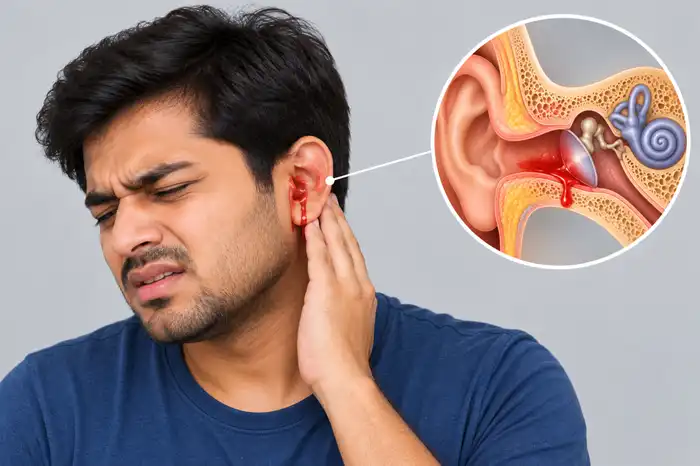
Ear bleeding refers to the condition whereby there is a discharge of blood from the ear canal or other deeper parts of the ear. Bleeding can originate from a variety of structures within the ear, as the causes of Ear Bleeding can be:
There are a number of reasons for bleeding from the ear:
Symptoms related to ear bleeding depend on the underlying condition. Common symptoms are listed below:
Emergency assessment and evaluation should be undertaken if a significant head injury is suspected and there is associated bleeding from the ear, loss of consciousness, or facial weakness.
It is important that some cases of ear bleeding be addressed as emergencies. Warning signs that require immediate medical attention:
Prompt assessment by ENT can reduce the risk of permanent hearing or neurological damage.
To determine the source and extent of ear bleeding, a thorough examination is essential. Evaluation may entail:
Modern imaging techniques are used when required, and all diagnostic assessments aim to make accurate treatment decisions.
The type of treatment required will depend on the cause and severity of ear bleeding.
In all cases of ear bleeding, medical professionals will perform a careful cleaning procedure and stop any active bleeding using sterile techniques.
Medication may be prescribed to treat the cause of the ear bleeding and includes:
If the cause of bleeding from the ear is a result of a foreign object within the ear canal, then an attempt will be made to remove this using a microscope or endoscope without damaging the ear any further.
The management for a damaged eardrum is dependent on the severity of the injury. A small tear will naturally heal over time; if there has been significant damage, then surgical repair may be necessary.
In cases of serious injury to the middle ear, persistent eardrum perforations, or complications as a result of a head injury, surgery may be required to ensure the appropriate treatment has been carried out. Modern ENT emergency treatment is designed to preserve hearing.
The recovery process following treatment for bleeding from the ear will depend on the initial cause and the depth of the injury. During your recovery, you may be asked to:
Patients with trauma who suffer from head injuries may require additional observation of their neurological function.
The benefits of seeking ENT care when symptoms arise are significant for the health and function of your ears and include:
There are a number of risks associated with ear bleeding if it is left untreated:
A number of steps can be taken to prevent ear bleeding, including:
LIKITA ENT Hospital is a trusted healthcare facility for Ear Bleeding Treatment in Patna, Bihar, India, providing specialized evaluation and treatment for ear injuries, ruptured eardrums, ear infections, foreign body injuries, and other conditions causing bleeding from the ear. Our ENT specialists focus on identifying the underlying cause, assessing damage to the ear structures, and developing individualized treatment plans to help protect hearing and prevent complications. With comprehensive ENT examinations, microscopic ear evaluation, advanced diagnostic facilities, appropriate medical management, and surgical intervention when required, LIKITA ENT Hospital aims to control bleeding, support healing, and preserve hearing whenever possible. Prompt assessment is particularly important when ear bleeding follows a head injury or occurs with sudden hearing loss, dizziness, or facial weakness.
Dr. Narendra Krishna Yadav
Last Updated: October 18, 2026
LIKITA ENT Hospital is a trusted ENT Centre for Ear Bleeding Treatment in Patna, Bihar, India, providing specialized evaluation and treatment for ear injuries, ruptured eardrums, ear infections, foreign body injuries, and other conditions causing bleeding from the ear. Our ENT specialists focus on identifying the underlying cause, assessing damage to the ear structures, and developing individualized treatment plans to help protect hearing and prevent complications. With comprehensive ENT examinations, microscopic ear evaluation, advanced diagnostic facilities, appropriate medical management, and surgical intervention when required, LIKITA ENT Hospital aims to control bleeding, support healing, and preserve hearing whenever possible. Prompt assessment is particularly important when ear bleeding follows a head injury or occurs with sudden hearing loss, dizziness, or facial weakness.