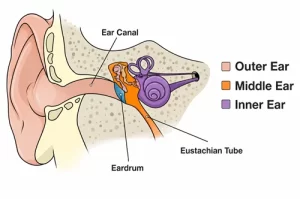
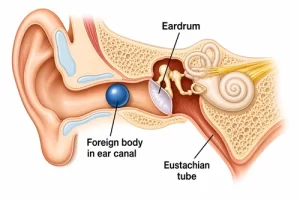
Cholesteatoma is a tumor of the middle ear that can be benign or malignant, and it destroys tissue and invades the spaces where the small bones responsible for hearing are located. When left untreated, cholesteatoma can cause a range of negative effects, including hearing loss and infection.
Middle-ear negative-pressure conditions, resulting from Eustachian tube dysfunction and chronic ear infections, lead to this condition, which causes eardrum retraction and accumulation of dead skin in the eardrum pocket. The accumulated material forms larger masses that continue to expand until they reach the surrounding tissues.
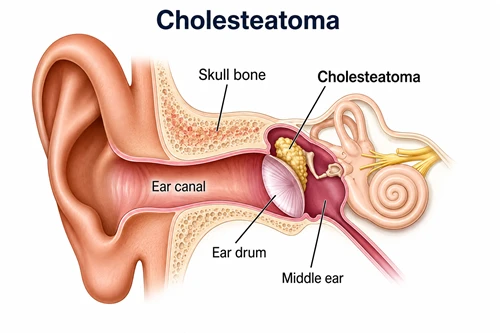
A cholesteatoma usually arises from repeated problems in the middle ear, caused by infection and improper air circulation.
Causes include:
Skin cells begin to grow abnormally in the middle ear because these medical conditions permit their collection.
Cholesteatoma symptoms begin to appear and become more severe with time. Identifying symptoms early prevents complications.
Common Symptoms Include:
Patients with untreated or severe cases face facial muscle weakness and recurrent infections as additional symptoms.
An accurate diagnosis of cholesteatoma is important to ensure treatment success.
The diagnostic methods include:
The investigations determine the severity of the condition, which helps develop a treatment plan.
Cholesteatoma requires surgical intervention because it does not respond to medications used for treating standard ear infections. The standard approach to handling the situation involves surgical techniques to remove the entire threat.
These short-term remedies help manage symptoms but do not address the cholesteatoma at hand.
It’s the only final answer.
Surgeries commonly performed on Cholesteatoma Patients Include:
Surgery works to eliminate all tumor mass while stopping tumor regrowth and safeguarding hearing abilities.
The untreated condition of cholesteatoma leads to dangerous health problems that can endanger lives.
Possible Complications Include:
Surgical procedures performed early help minimize associated risks.
There are multiple causes of cholesteatoma formation, making prevention difficult, but managing ear-related risk factors is helpful.
People should address their symptoms early, as this helps them identify the condition before it becomes more severe.
Cholesteatoma patients require ongoing medical evaluation after treatment.
Key Recommendations:
Patients who receive appropriate medical treatment and the care they require can achieve successful outcomes while avoiding future health issues.
Last Updated: August 13, 2026
Likita ENT Hospital offers advanced Cholesteatoma treatment in Patna, Bihar, India, at an affordable cost. Our team of experienced ENT specialists provides accurate diagnosis and personalized treatment plans based on the severity and extent of the condition, including medical management, regular ear monitoring, and surgical procedures such as tympanoplasty and mastoidectomy when required. With advanced diagnostic facilities, experienced ENT surgeons, and a patient-focused approach, Likita ENT Hospital is committed to providing safe and effective Cholesteatoma treatment while protecting hearing, controlling infection, and reducing the risk of complications. Our ENT team provides comprehensive care and long-term follow-up for patients with Cholesteatoma in Patna, Bihar, India.