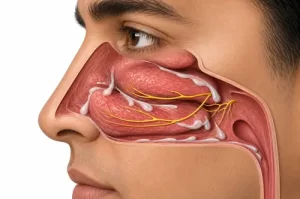
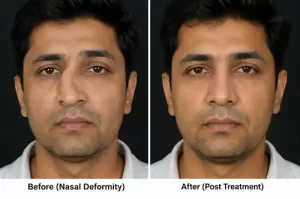
When the nasal septum is deviated, it is known as a Deviated Nasal Septum (DNS) – the thin partition between the nasal passages made up of cartilage and bone – that deviates to one side. Although the nasal septum is often slightly deviated from the midline in many people, severe cases can cause airflow obstruction, difficulty breathing, frequent sinus infections, and other complications within the nasal cavity.
While a deviated septum can be congenital in origin or result from an accident or trauma to the nose, not all patients necessarily experience symptoms. In those who do, they might have trouble breathing through their nose as well as sleep disorders. A precise diagnosis and appropriate therapy can help resolve the problem.
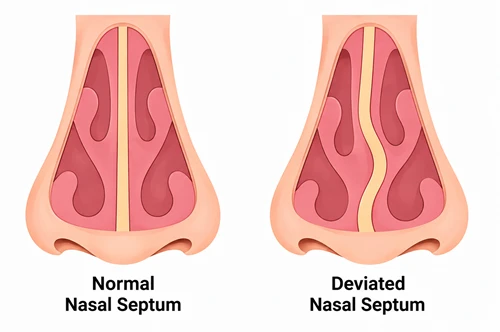
A DNS is caused by either congenital or acquired factors.
Common Causes Include:
In some cases, even a minor injury during childhood can trigger a deviated nasal septum.
The severity of the septal deviation will determine the symptoms.
Symptoms Often Associated with This Condition Are:
In extreme cases, sleep-breathing issues may result from this disorder.
Severity and anatomical deviation of the cartilage affect the type.
The types help determine an appropriate method for this condition.
Proper diagnosis is important for assessing the degree of septal deviation and associated issues.
Diagnostic Techniques Include:
Diagnosis helps ENT doctors formulate treatment plans.
Depending on the severity of symptoms and their effects on patients’ lives, treatment varies.
In mild cases, treatment consists of drug therapy to reduce nasal swelling.
Common Medications Include:
However, medications are used only to alleviate symptoms and do not treat the underlying condition.
In case symptoms persist, surgery is often recommended.
A surgical treatment called septoplasty is used to fix the nasal septum. It is administered intranasally and leaves no scars.
There are situations when septoplasty can be supplemented by:
Today’s surgical treatment provides reliable results for the patient.
When a deviated septum remains untreated, several complications might develop.
Potential Complications Include:
Proper treatment prevents further complications.
Not all instances of DNS can be prevented, particularly congenital cases, but one can reduce the risk of developing this condition.
Methods of Prevention Include:
Proper initial care can help avoid structural difficulties in the future.
Living with a deviated septum does not have to cause much trouble with the right management of the condition.
Important Considerations:
Likita ENT Hospital offers safe and effective Deviated Nasal Septum Treatment in Patna, Bihar, India, at an affordable cost. Our team of experienced ENT specialists provides accurate nasal examination and diagnostic assessment to identify the severity and location of the septal deviation and evaluate its impact on breathing. Treatment is tailored according to the degree of nasal blockage, symptoms, associated nasal conditions, and individual patient needs, with appropriate care provided for children and adults. When required, our ENT specialists can manage associated nasal obstruction, difficulty breathing, recurrent sinus problems, snoring, nosebleeds, or chronic nasal congestion and recommend suitable medical or surgical treatment, including septoplasty when appropriate. With advanced ENT diagnostic facilities, experienced specialists, and a patient-focused approach, Likita ENT Hospital is committed to providing safe, precise, and comfortable Deviated Nasal Septum Treatment in Patna, Bihar, India.