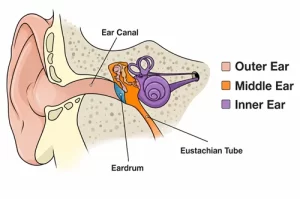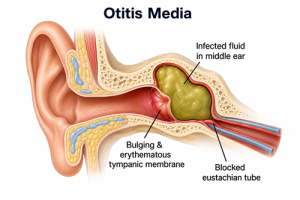
A perforated eardrum is a condition where there is a rip or hole in the thin tissue lining that separates the outer ear from the middle ear. This thin membrane, also called the tympanic membrane, helps the ear function by vibrating in response to sound waves. This vibration is transferred from the eardrum to the ear bones. The perforation causes damage to this vital function, hence compromising the ear’s capacity to receive sound waves. A person with a perforated eardrum will have difficulty hearing and is susceptible to various ear diseases due to weakened defenses against germs.
A perforated eardrum may develop suddenly after an injury or infection, or occur gradually due to a condition affecting the ear, such as chronic ear disease. Most small perforations heal on their own without medical intervention, but larger perforations require treatment.
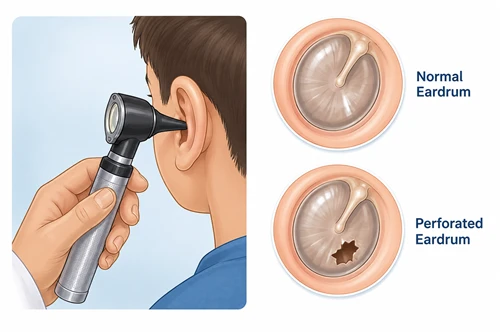
There are several reasons a perforation can develop in the eardrum.
Common Causes include:
The symptoms associated with the problem will depend on the tear’s size and its source.
Symptoms Include:
Patients with minor perforation might experience few or no symptoms.
It can be categorized by location, size, and duration of perforation.
Knowing the type of condition will help choose treatment.
A correct diagnosis is crucial for treating a torn eardrum.
Diagnostic Approaches:
These approaches will enable the identification of the degree, origin, and cause of the eardrum perforation.
The treatment for the condition varies depending on the size of the eardrum perforation and the extent of the infection.
Non-Surgical Treatment Options include:
Surgical intervention is preferred if the eardrum perforation is large or does not heal spontaneously.
Common Surgeries:
Repairing the eardrum hole, preventing infection, and regaining hearing are the primary goals of surgery.
If not addressed promptly, complications may arise from eardrum perforation.
Potential Complications include:
The prevention strategy includes avoiding ear trauma and infections.
Preventive Measures
The risk of getting this illness can be greatly reduced with a few preventive steps.
Living with a hole in your eardrum requires some care until it heals completely or is successfully treated.
Tips for Managing a Perforated Eardrum
If you exercise caution, you are likely to recover fully and retain your hearing.
Likita ENT Hospital offers safe and effective Perforated Eardrum Treatment in Patna, Bihar, India, at an affordable cost. Our team of experienced ENT specialists provides accurate ear examination and hearing evaluation to identify the size, location, and cause of the eardrum perforation and assess the condition of the middle ear. Treatment is tailored according to the severity of the perforation, duration, symptoms, presence of infection, and individual patient needs, with appropriate care provided for children and adults. When required, our ENT specialists can manage associated ear discharge, infection, hearing loss, pain, or recurrent ear problems and recommend suitable medical or surgical treatment, including eardrum repair procedures when appropriate. With advanced ENT diagnostic facilities, experienced specialists, and a patient-focused approach, Likita ENT Hospital is committed to providing safe, precise, and comfortable Perforated Eardrum Treatment in Patna, Bihar, India.