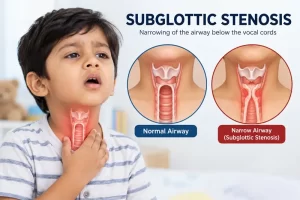
Vocal cord palsy, also called vocal cord paralysis, involves problems with the nerve pathways and the muscles to the voice box (larynx), and is a situation where one or both vocal cords are not able to move properly as they are weakened or paralyzed due to an issue with the nerve pathway that supplies the muscles for the voice box (larynx). As such, they control breathing, talking, and swallowing, and protect the airway during the swallowing of food and drink. When the movement of one or both voice cords is impaired, the child may experience breathing difficulties, an inability to cry effectively (a soft or weak cry), feeding problems, and/or inspiratory stridor (a high-pitched sound on breathing).
In a child, the condition may be present at birth (congenital) or acquired (develops at a later stage) due to trauma, nerve damage, infections, neurological conditions, or post-surgery to an adjacent anatomical structure that is closely associated with nerve pathways which are responsible for supplying muscles of the voice box (larynx), brain, and spinal cord, etc. The child would display different signs and symptoms depending on whether one vocal cord or both vocal cords are paralyzed.
Prompt diagnosis is crucial for treatment, as it has long-term implications for a child’s feeding, voice, growth, and airway function. Timely ENT evaluation for airway examination and evaluation of swallowing problems during feeding will prompt the initiation of appropriate treatment, thereby improving voice and airway function.

Vocal cord palsy happens when the nerve pathways controlling the muscles used for movement in the vocal cords are weak or damaged.
Some of the commonly seen causes in children include:
In some cases, nerve pathway recovery will improve, and the child may show natural improvement with treatment.
Depending on which vocal cords are impacted, the symptoms can vary in intensity.
The common signs and symptoms in the child include:
When both vocal cords are paralyzed, there is a risk of severe breathing difficulties from airway obstruction.
Types depend on whether one or more vocal cords are involved:
Accurate diagnosis is important for assessing vocal cord movement, vocal cord palsy, and, importantly, airway safety.
Methods of Diagnosis include:
These assessments help the ENT specialist evaluate the extent and cause of the problem for appropriate management.
Treatment depends on the nature and severity of the symptoms, particularly those involving the airway and swallowing.
Some less severe cases recover over time, with improvement in nerve function, and are therefore followed up closely.
Other comorbidities associated with vocal cord palsy should be treated effectively. Reflux treatment, prevention, and treatment of chest infection are common and important treatments.
Improves voice quality and verbal communication and helps teach effective swallowing strategies.
Surgery is necessary when the child has significant airway compromise or recurrent aspiration, which affects their health and development due to feeding issues.
The procedures performed are to widen the airway or position the vocal cords towards midline to achieve adequate and efficient airway closure during feeding and talking. These can include:
If timely treatment is not sought for the condition, there may be respiratory problems, as well as those involving eating. The complications that can arise are:
Early intervention provides optimal improvement in both airway safety and the child’s developmental outcomes.
Vocal cord palsy may not always be preventable, especially when present at birth. Nevertheless, early intervention can significantly reduce symptom severity. Measures that may help to reduce the risks of developing vocal cord Palsy in some children are:
Timely diagnosis is very important for preventing long-term complications of the airway, voice, and speech.
Children diagnosed with Vocal Cord Palsy often require consistent medical care and support from medical professionals as well as their parents and family. The Key things to take away for parents are to:
Many children will eventually regain control of their voice and airway with appropriate management and rehabilitation.
Likita ENT Hospital offers safe and effective Vocal Cord Palsy Treatment in Children in Patna, Bihar, India, at an affordable cost. Our team of experienced Pediatric ENT specialists provides accurate voice and airway examination and diagnostic assessment to identify vocal cord movement problems and evaluate their effect on the child’s voice, breathing, and swallowing. Treatment is tailored according to the cause, severity, number of affected vocal cords, duration of symptoms, age of the child, and individual needs. When required, our Pediatric ENT specialists can manage associated hoarseness, weak or breathy voice, noisy breathing, stridor, difficulty swallowing, choking, aspiration, or breathing difficulties and recommend suitable observation, voice therapy, vocal cord procedures, or surgical treatment when appropriate. With advanced ENT diagnostic facilities, experienced specialists, and a child-focused approach, Likita ENT Hospital is committed to providing safe, precise, and comfortable Vocal Cord Palsy Treatment in Children in Patna, Bihar, India.