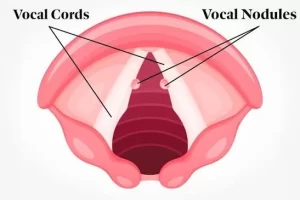
Vocal cord tumor are abnormal growths occurring on the larynx’s (voice box) vocal cords. Depending on their nature, these growths can be benign (non-cancerous) or malignant (cancerous). They can cause changes in a patient’s voice and even in his or her ability to breathe or swallow, since the vocal cords produce sound. Even benign vocal cord tumor can cause persistent hoarseness.
While benign vocal cord tumor usually grow slowly and may include cysts, polyps, papillomas, or granulomas, malignant tumor (the most common being laryngeal cancer) necessitate urgent diagnostic procedures and timely treatment to prevent disease spread and preserve voice function and airway patency. In cases like that, hoarseness lasting more than 2 weeks warrants a consultation with an ENT specialist.
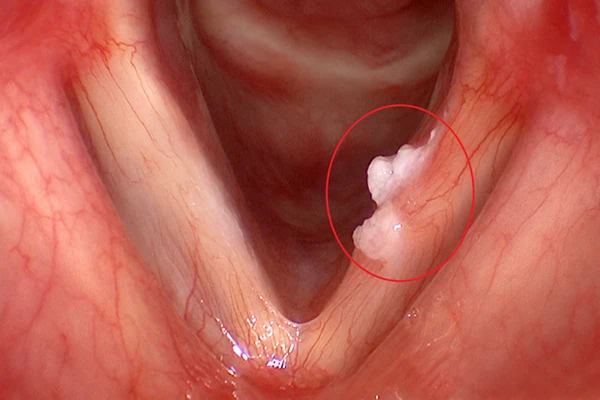
The causes of vocal cord tumor can differ depending on the type of growth.
Main Risk Factors
Among other factors that increase the risk of developing cancerous tumor of the vocal cords, smoking and using any tobacco products rank high.
The nature of the symptoms depends on the tumor’s size, localization, and type.
Common Symptoms Associated With the Disease Include:
These symptoms should not be overlooked; immediate attention is needed.
Tumor can be either benign or cancerous.
These are non-cancerous growths that generally do not spread.
Common Benign Tumor Include:
Cancerous tumor, on the contrary, are more aggressive and can invade nearby organs and spread.
Common Malignant Tumor Include:
Timely diagnosis is critical to maintain vocal quality and obtain the most favorable results.
Examination of patients and assessment of voice qualities
These methods assist ENT specialists in accurately diagnosing and staging the tumor.
The approach to treating a tumor depends on its type, location, size, and stage.
In some cases, some benign or inflammatory lesions might respond to medical management and voice therapy.
Voice rehabilitation can be beneficial before or after treatment to restore vocal cord function.
It is a common approach for treating both benign and malignant tumor.
Include:
In case of cancer, patients might receive:
In the early stages of the disease, the prognosis is good, with the possibility of retaining the patient’s voice.
Vocal Cord Tumor, left untreated, can cause severe complications.
Possible Complications:
The likelihood of a successful course of treatment increases with early diagnosis and appropriate treatment.
Maintaining a healthy overall lifestyle may help reduce the likelihood of developing vocal cord tumor.
Preventive Measures:
Having vocal cord tumor may impact the way one communicates and feels emotionally.
Useful Advice:
Thanks to current advances in therapy and rehabilitation, most patients achieve adequate voice restoration and maintain their quality of life.
Likita ENT Hospital offers safe and effective Vocal Cord Tumor Treatment in Patna, Bihar, India, at an affordable cost. Our team of experienced ENT specialists provides accurate throat and voice examination and diagnostic assessment to identify the type, size, location, and extent of the vocal cord tumor and evaluate its impact on voice and airway function. Treatment is tailored according to the nature of the tumor, whether benign or malignant, its stage and location, severity of symptoms, and individual patient needs. When required, our ENT specialists can manage associated hoarseness, voice changes, difficulty breathing, swallowing problems, throat discomfort, or other related symptoms and recommend appropriate medical, surgical, or multidisciplinary treatment based on the diagnosis. With advanced ENT diagnostic facilities, experienced specialists, and a patient-focused approach, Likita ENT Hospital is committed to providing safe, precise, and comfortable Vocal Cord Tumor Treatment in Patna, Bihar, India.