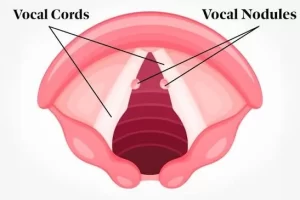
Vocal polyps refer to a benign growth caused by irritation, inflammation, or excess stress on the vocal cords. The swollen, soft growth impedes vocal cord vibration and affects voice quality. Vocal polyps are common among people who frequently use their voices, such as singers, teachers, and public speakers.
In contrast to vocal nodules, which consist of small lumps that form on both vocal cords, vocal polyps are large and soft lumps that form on only one vocal cord. Early diagnosis and treatment of vocal polyps will help maintain your voice’s health.
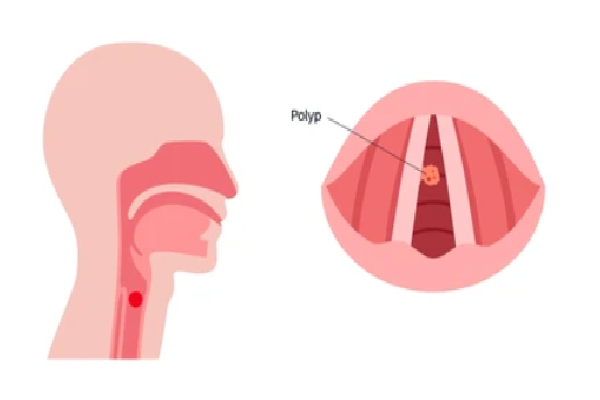
Vocal polyps result from irritation and injury of the vocal cords.
Causes of Vocal Polyps Include:
Continuous stress of the vocal cords results in swelling and the formation of localized growths.
Typically, symptoms emerge gradually and can escalate if the voice is repeatedly strained.
Some Common Symptoms Are As Follows:
At times, vocal polyps can cause a break in the voice tone and affect its projection.
Vocal polyps vary in size, shape, and texture.
Identifying the type makes it easier to formulate a treatment plan.
Diagnosis will help to determine the size and extent of the vocal polyp.
Methods For Diagnosis Include:
These tests help ENT professionals identify vocal polyps.
This depends on the size of the polyp, the severity of the symptoms, and the patient’s vocal needs.
Voice therapy helps develop proper vocal technique and prevents vocal cord strain.
This includes:
If surgery becomes necessary, it implies:
A less invasive procedure is performed to remove a polyp while preserving the vocal cords.
Advancements in modern medicine have improved outcomes and shortened recovery times.
Untreated vocal polyps can lead to various complications.
Some of them include:
Vocal hygiene practices can help prevent the formation of vocal polyps.
Preventive Steps Include:
Voice care plays a pivotal role in long-term vocal health.
Patients with vocal polyps are advised to receive adequate care and therapy.
Important Tips:
With appropriate treatment, rehabilitation, and maintenance, most people restore a healthy vocal quality.
Likita ENT Hospital offers safe and effective Vocal Polyps Treatment in Patna, Bihar, India, at an affordable cost. Our team of experienced ENT specialists provides accurate voice and throat examination and diagnostic assessment to identify the size, location, and characteristics of vocal polyps and evaluate their effect on vocal cord function. Treatment is tailored according to the size and severity of the polyp, duration of symptoms, voice usage, underlying cause, and individual patient needs, with appropriate care provided for children and adults. When required, our ENT specialists can manage associated hoarseness, rough or breathy voice, voice fatigue, vocal strain, or persistent voice changes and recommend suitable treatment, including voice therapy, vocal hygiene measures, or surgical removal when appropriate. With advanced ENT diagnostic facilities, experienced specialists, and a patient-focused approach, Likita ENT Hospital is committed to providing safe, precise, and comfortable Vocal Polyps Treatment in Patna, Bihar, India.