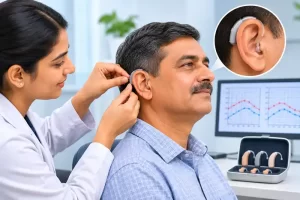
Hearing Screening is a vital audiological procedure that effectively detects potential hearing problems. The process is fast, harmless, and noninvasive, and it is conducted to determine whether a person has hearing impairments. The procedure is carried out in the pre-clinical stage before hearing problems become apparent through communication problems. Early detection of hearing problems is vital, as it may lead to detrimental outcomes, including poor learning, speech difficulties, social interaction challenges, and a general reduction in quality of life.
Language and cognitive development are significantly influenced by hearing, as well as general communication. Any degree of hearing loss affects a person’s ability to learn languages and communicate. In adults, unattended hearing problems may cause problems in the office setting, emotional distress, and even social isolation.
The procedure is highly recommended for newborns, school-age children, people exposed to high noise levels, older adults, patients with recurrent ear infections, patients with tinnitus or dizziness, and patients with hereditary hearing conditions.
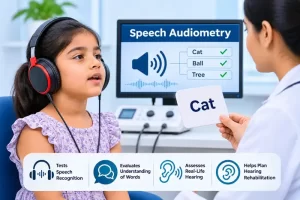
Today’s Hearing Screening uses audiological techniques to effectively assess patients’ hearing capacity. Depending on the patient’s age and health condition, one of several types of Hearing Screenings can be conducted – Otoacoustic Emissions (OAEs), Automated Auditory Brainstem Response (AABRs), Pure Tone Hearing Testing, or speech-hearing screening.
Proper identification and prompt measures will lead to significant improvements in speech, education, communication skills, and overall hearing.
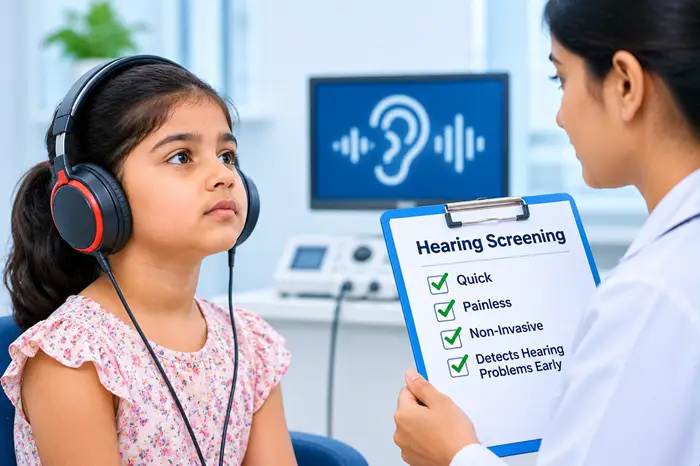
A Hearing Screening is a test that assesses for hearing impairments or other ear-related issues.
Benefits of Hearing Screening include:
Hearing Screening should be done by individuals of all ages.
Groups Who Should Have Regular Audiology Testing Include:
Regular hearing checks help prevent hearing problems from becoming too serious.
It is important for infants to undergo hearing tests to facilitate speech and language development.
The Importance of Early Hearing Screenings Includes:
Babies can undergo hearing treatments when still in crucial developmental stages.
Commonly Found Problems Are As Follows:
Evaluations are helpful in avoiding further deterioration of hearing.
Various hearing screening tests are carried out based on age and the need for hearing check-ups.
The process differs depending on the type of hearing screening test chosen.
General Procedure Includes:
Most screening tests take little time to complete.
Early detection of hearing problems brings various advantages.
Some Advantages Are:
Hearing problems identified early can help achieve successful communication.
Hearing Screening enables the identification of different hearing issues.
Various Problems Include:
More tests may be needed if abnormalities are found.
If a hearing problem is diagnosed, further hearing tests and rehabilitation may be needed.
Possible Types of Hearing Rehabilitation:
Rehabilitation can help increase one’s capacity to communicate.
Regular hearing testing plays a major role in ensuring good auditory health.
Advantages of Regular Hearing Testing:
The importance of preventive hearing tests cannot be overlooked.
LIKITA ENT Hospital is a trusted ENT Centre for hearing screening in Patna, Bihar, India, providing specialized hearing assessment support for newborns, children, adults, and older individuals who may be experiencing hearing difficulties, delayed speech development, tinnitus, or communication challenges. Our ENT specialists focus on identifying potential hearing problems, selecting appropriate screening tests, and recommending further audiological evaluation when required. With screening methods such as Otoacoustic Emissions (OAE), Automated Auditory Brainstem Response (AABR), pure-tone hearing testing, and speech screening when indicated, LIKITA ENT Hospital aims to support early identification of hearing difficulties and timely intervention. Personalized guidance, appropriate hearing rehabilitation recommendations, and regular follow-up help patients and families understand their hearing needs and take informed steps toward better communication and quality of life.