
Impedance Audiometry is a sophisticated audiological examination developed to assess the eardrum, middle ear, and auditory reflex pathways. This test is considered one of the essential diagnostic tools used by ENT specialists and audiologists to diagnose various middle ear disorders, such as fluid behind the eardrum, Eustachian tube dysfunction, and ossicular disorders. In contrast to simple hearing examinations, which measure hearing abilities, impedance audiometry measures the effectiveness of sound transmission in the middle ear cavity.
It is commonly known that vibrations from the eardrum are transferred to the inner ear via the middle ear. Conditions affecting the middle ear fluid, the eardrum, the Eustachian tube, and the ossicular chain can lead to hearing impairments, a sensation of having full ears, pain, and recurrent ear infections.
The procedure is widely used for patients with hearing loss, ear infections, clogged-ear sensations, tinnitus, vertigo, delayed speech development, possible Eustachian tube disorder, or as part of preparation for hearing aid fittings and surgery. Impedance Audiometry is also widely used to test children, since middle ear conditions are common in this population.
Impedance Audiometry is absolutely safe, takes very little time, doesn’t cause any pain, and is completely non-invasive. The procedure uses special diagnostic devices that measure the degree of eardrum movement, middle ear pressure, and acoustic reflexes. The data obtained from the tests will determine whether the sound passes correctly through the middle ear.
Advanced impedance audiometry systems are used in modern otolaryngology centers and audiological clinics to provide precise diagnosis and develop appropriate hearing rehabilitation programs.
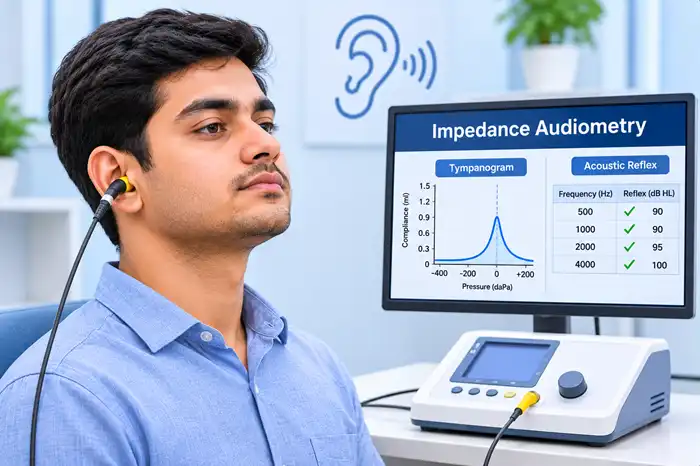
An examination called impedance audiometry enables the diagnosis of middle ear function and evaluation of the effectiveness of sound transmission via the middle ear.
The Test Helps Evaluate:
It helps in diagnosing problems related to conductive hearing loss.
Impedance audiometry consists of several middle ear tests.
The test may be recommended for those with ear-related problems or complaints.
Common Reasons for This Test:
Patients experiencing these symptoms can benefit from impedance measurement.
Common Symptoms Are As Follows:
Early diagnosis prevents further complications.
This process is simple and painless.
Impedance Audiometry Process Includes:
The examination is fast and does not cause any harm.
This test gives many insights regarding the state of the middle ear and hearing abilities.
Common Advantages Are As Follows:
It is a crucial aspect of the hearing examination.
Many ENT and hearing disorders can be identified through this test.
Common Problems Diagnosed include:
Since children commonly suffer from middle ear disorders, these can impair their hearing and the development of speech and language skills.
Benefits for Children include:
This is a completely safe, non-invasive procedure in audiological testing.
Characteristics include:
Patients experience the test comfortably.
Patients with middle ear or auditory problems may need further management.
Treatment and Rehabilitation Might Consist of:
Prompt treatment leads to enhanced hearing and speech skills.
Early detection helps prevent hearing and speech disorders.
Early Detection Ensures:
Regular ear check-ups are essential to maintain good auditory health.
LIKITA ENT Hospital is a trusted ENT Centre for impedance audiometry testing in Patna, Bihar, India, providing specialized evaluation of middle ear function for children and adults experiencing hearing difficulties, ear fullness, recurrent ear infections, tinnitus, or delayed speech development. Our ENT specialists focus on comprehensive ear assessment, appropriate selection of audiological tests, and individualized diagnostic evaluation based on each patient’s symptoms and clinical needs. With tests such as tympanometry, acoustic reflex testing, and Eustachian tube function assessment when indicated, LIKITA ENT Hospital aims to support the identification of middle ear problems, fluid behind the eardrum, and conditions that may contribute to conductive hearing loss. Personalized diagnostic guidance, appropriate treatment recommendations, and follow-up care help patients understand their hearing health and take informed steps toward better auditory function and communication.
