Micro laryngeal surgery is a highly specialized ENT surgical procedure performed to diagnose and treat disorders of the larynx (voice box) using state-of-the-art microscopic techniques. The larynx plays an important role in voice production, breathing, and airway protection during swallowing. Laryngeal disorders affecting the vocal cords or the structures surrounding them can result in hoarseness, vocal changes, breathing difficulty, throat pain and soreness, chronic cough, or difficulty swallowing.
Common conditions treated with microlaryngeal surgery include vocal cord nodules, vocal polyps, cysts, papillomas, leukoplakia, early-stage laryngeal tumors, lesions causing vocal cord paralysis, and chronic laryngeal inflammation. In this ENT procedure, ENT surgeons use microscopic tools and advanced endoscopy systems to operate with extreme precision on delicate structures such as the vocal cords.
It is minimally invasive and aesthetically undetectable because it is performed through the mouth without any exterior incisions. By safely and successfully removing sick tissue, contemporary microlaryngeal techniques seek to maintain normal vocal fold function.
This procedure is an excellent option for treating voice disorders because it can greatly improve vocal capabilities, relieve throat irritation, and thus enhance communication skills.
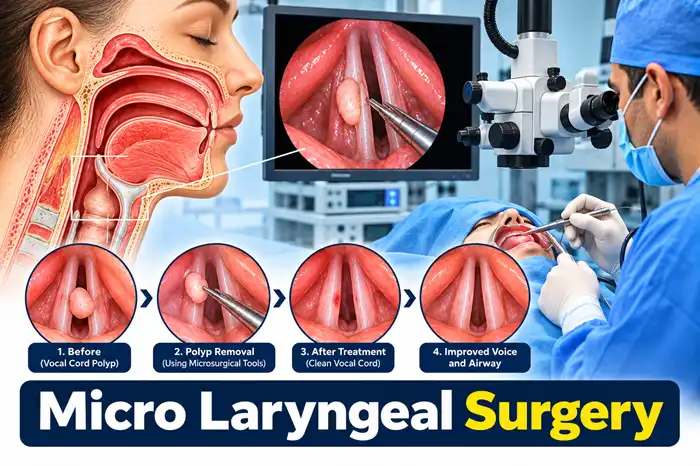
The voice box, medically known as the larynx, is an anatomical structure in the throat, positioned between the pharynx and the windpipe.
The Major Functions of the Larynx Include:
• Production of sound to form a voice
• Prevention of foreign bodies entering the airway during swallowing
• Control of breathing flow rate
• Speech and communication
The vocal cords within the larynx vibrate and produce the voice during speech.
Patients who suffer from persistently problematic voice or throat conditions that do not respond to conservative management will be recommended to undergo microlaryngeal surgery.
Common Conditions Treated:
• Nodules on the vocal cords
• Polyps on the vocal cords
• Cysts on the vocal cords
• Hoarseness, chronic
• Recurrent respiratory papillomatosis
• Leukoplakia of the vocal cords
• Benign vocal cord lesions
• Laryngeal cancer in its initial stages
• Persistent throat disorders with impairment of voice function
• Airway obstruction caused by lumps in the larynx.
Timely medical intervention guarantees that voice quality is maintained and complications are avoided.
Various diseases affect the voice box and vocal cords; some of these include:
• Overuse of the vocal cords
• The use of tobacco products
• Reflux of acid into the throat
• Throat irritation
• Viral infection
• Allergies
• Trauma to the vocal cords
• Presence of tumors (benign or malignant)
Certain professions, such as singing or public speaking, are more prone to laryngeal conditions due to the professional use of their voices.
Patients who require microlaryngeal surgery may experience chronic, bothersome vocal and throat conditions.
Common Symptoms of Laryngeal Diseases Include:
• Hoarse sound of the voice
• Weakness in the voice
• Being tired while talking
• Not being able to pronounce words well.
• Pain in the throat
• Coughing
• Swallowing problems
• In extreme cases, breathing problems
• A feeling of a lump in the throat
If you have hoarseness for longer than 2 weeks, it must be investigated by a specialist immediately.
It is important to undergo a detailed examination before planning microlaryngeal surgery.
Diagnostic tests used before micro-laryngeal surgery are follows:
• Complete ENT check-up.
• Laryngoscopy
• Video laryngoscopy
• Stroboscopy to assess the vibration of the vocal cords.
• Voice analysis and assessment
• Biopsy of suspicious growths in the larynx
• Selected cases may require an imaging study to assess other structures.
These tests can effectively identify the exact cause and severity of the laryngeal ailment.
In a typical microlaryngeal surgery, it is carried out under general anesthesia, with high-powered operating microscopes and endoscopic instruments used for visualization and the surgical task.
• A laryngoscope is inserted into the mouth to get direct visualization of the vocal cords.
• The surgeon operates under a microscope at the precise location and removes any lesions or growths using fine micro-instruments.
• In selected cases, a biopsy is taken from any suspicious areas and sent for examination.
The ENT surgeon performs this procedure through the mouth, with no external cuts required, ensuring a scar-free cosmetic outcome. Modern ENT micro-laryngoscopy instruments, such as operating microscopes, provide excellent precision, thereby minimizing trauma to vocal cord tissue and preserving voice quality.
Common conditions that are treated with this minimally invasive ENT surgery include:
• Vocal nodules
• Vocal polyps
• Vocal cord cysts
• Laryngeal papillomas
• Leukoplakia
• Benign vocal cord tumors
• Early-stage malignant tumors of the larynx
• Chronic inflammation in the larynx
Timely treatment of these ENT conditions can prevent significant deterioration of voice and preserve airway function.
Most patients will heal in a couple of weeks after the procedure.
Postoperative Care:
• Strictly avoid using your voice as per the doctor’s instructions.
• Do not smoke or inhale irritant vapors.
• Take prescribed medications.
• Remain hydrated and use steam inhalation to prevent mucus from drying in the airways.
• Undergo regular laryngoscopy to monitor vocal cord healing.
• Voice therapy is recommended by ENT doctors and therapists.
• Patients may experience mild throat discomfort or mild hoarseness for the initial few weeks after surgery.
The patient experiences symptom relief and can recover a better voice.
The positive results of this surgery include:
• Improved clarity and quality of voice.
• Relief from hoarseness of voice.
• Complete removal of lesions like vocal cord polyps, nodules, or growths on the vocal cords.
• Airway problems are managed by this procedure.
• Throat pain and irritation have reduced considerably.
• Voice quality is preserved during surgery, thereby protecting the voice from further deterioration.
• Better communication is restored, leading to an improved quality of life.
Patients may experience remarkable improvement in their voices if the surgery is performed and followed up appropriately.
This ENT surgical procedure is typically very safe, but some patients may still experience certain side effects.
Risks that may occur include:
• Temporary change of voice.
• Bleeding after surgery.
• Infection.
• Permanent scarring of the vocal cords.
• Hoarseness that may persist after surgery.
• Airway swelling may rarely occur in such a procedure.
• Return of growths and lesions which may require follow-up.
To minimize such side effects, it is important to have a highly skilled ENT surgeon perform this micro-laryngoscopy surgery, along with specialized voice rehabilitation.
It is important to care for the voice after surgery.
Precautionary Measures Post-Surgery:
• Avoid strained speaking and vocal overuse.
• Stay well hydrated.
• Avoid any exposure to smoke and alcohol.
• Adhere to voice therapy sessions as recommended.
• Seek prompt medical advice for any sore throat or cough symptoms that might develop; consult an ENT specialist about the same.
• Attend follow-up ENT checkups as scheduled.
Vocal hygiene will play an integral part in the prevention and treatment of all these ENT diseases.
LIKITA ENT Hospital is a trusted ENT Centre for Micro Laryngeal Surgery in Patna, Bihar, India, providing specialized evaluation and treatment for vocal cord nodules, vocal polyps, vocal cord cysts, papillomas, leukoplakia, benign vocal cord lesions, early-stage laryngeal tumors, chronic hoarseness, and other laryngeal disorders. Our experienced ENT surgeons use advanced laryngoscopy, operating microscopes, endoscopic visualization, and precise microlaryngeal surgical techniques to treat delicate vocal cord and laryngeal conditions while focusing on preservation of voice function. With comprehensive diagnostic evaluation, individualized surgical planning, specialized voice-focused treatment, and dedicated postoperative follow-up, LIKITA ENT Hospital focuses on improving voice quality, managing laryngeal symptoms, preserving vocal cord function, supporting smooth recovery, and improving long-term communication and quality of life.