Tonsillectomy is a common ENT procedure performed to remove the tonsils, two oval lymphoid tissues on each side of the back of the throat that are part of the body’s defense system and help prevent illness in early childhood. The tonsils themselves, however, may develop frequent infections or become enlarged and obstructed, causing chronic sore throats, breathing problems, swallowing difficulties, and disturbed sleep.
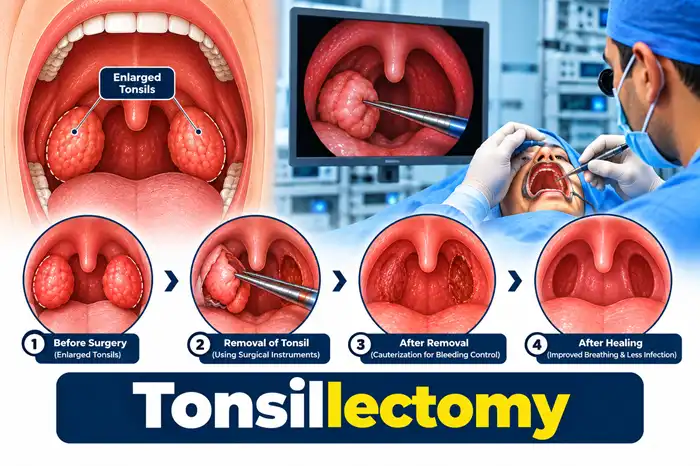
Tonsillectomy is appropriate for patients with a wide range of troublesome tonsil-related conditions. The surgery can effectively remedy tonsil-related breathing problems and infections when recurrent tonsillitis or enlarged tonsils disrupt sleep, cause difficulty breathing and swallowing, and significantly diminish a person’s overall well-being. Tonsillectomy is also performed for obstructive sleep apnea, difficult deglutition, recurrent tonsillar abscess, or the suspicion of abnormal tonsil tissue growth or tumors.
Specialized surgical instruments and modern methods are used to ensure that each tonsillectomy reduces the risk of blood loss, minimizes post-surgical pain, and optimizes recovery time and ease. Tonsillectomy is typically performed under general anesthesia. Depending on the patient’s specific problem and symptoms, other surgical methods may be employed, including cold dissection, coblation, laser-assisted surgery, or electrocautery. Tonsillectomy procedures performed in the ENT department help improve breathing, sleep quality, deglutition, speech clarity, and overall comfort in both children and adults with throat infections, obstructed breathing, or chronic, persistent tonsillar disease.
Tonsils are masses of lymphatic tissue on each side at the back of the throat that help the body prevent germs from entering the body. They are also involved in antibody production. Although they serve as a defense mechanism, the tonsils can become infected or enlarged, which can negatively affect a person’s throat, airways, and speech.
Functions of the tonsils include:
• Recognizing germ types
• Defending the respiratory tract against infections in childhood
• Producing Antibodies and Immune Cells
Tonsillectomy is recommended for individuals with chronic or recurrent throat infections.
Common conditions requiring the procedure:
• Frequent tonsillitis episodes
• Recurring or chronic tonsil infections
• Large tonsils obstruct breathing.
• Snoring or obstructive sleep apnea
• Swallowing difficulties
• Frequent recurring peritonsillar abscess
• Tonsil stones or tonsilliths
• Persistently bad breath resulting from throat infections.
• The suspicion of abnormal growth or a tumor within the tonsils
Frequently, a patient will experience problems at school or work, at home, or during sleep that cause distress, a decline in quality of life, and, consequently, more frequent infections, and will benefit from a tonsillectomy.
There are several reasons why patients develop tonsillar disease. These include:
• Recurrent bacterial and viral infections
• Constant and recurring inflammation within the tonsils
• Enlargement of tonsillar tissue
• Multiple throat infections
• Poor drainage of tonsillar crypts
• Sleep apnea is induced by airway obstruction.
Most often, a patient with tonsillar disease is in the pediatric age group, but in adults, chronic tonsillar disease may be seen.
A person who would require tonsillectomy would experience many, if not all, of the following symptoms;
• Frequent throat aches or soreness
• Pain whilst swallowing food or drink.
• Fever is associated with an episode of tonsillitis.
• Enlarged and/or swollen tonsils.
• Snoring and mouth breathing during sleep.
• Sleep disturbances or apnea.
• Mouth odor or bad breath.
• Patches of pus on the tonsils.
• Recurring or persistent throat infections
Excessive tonsillar enlargement may be evident.
A thorough assessment is performed prior to proceeding with tonsillectomy. This assessment typically involves:
• A full ENT examination, including the throat
• Medical history is taken concerning any recurring throat infections or related illnesses.
• Assessment of any problem of snoring or apnea by asking about how they sleep at night
• When necessary, blood tests are performed.
• Evaluation for airway obstruction or swallowing problems by a variety of measures.
These evaluations will assist the consultant in deciding if the tonsils need to be surgically removed.
Tonsillectomy is typically performed as an outpatient operation while the patient is under general anesthesia.
The Surgical Procedure Includes:
• The surgeon will make an incision, remove both tonsils, and control the flow of blood from the throat.
• The removal of the tonsils takes place from each side at the back of the throat.
• Procedures are put into place to minimize the blood loss during surgery.
• Precision surgical instruments enhance patient safety.
• There are a number of techniques to perform tonsillectomy, including:
• Cold dissection tonsillectomy
• Coblation tonsillectomy
• Electrocautery tonsillectomy
• Laser-assisted tonsillectomy
• Radiofrequency-assisted tonsillectomy
The actual operation can take anywhere from 20 to 45 minutes. All operations are carried out through the mouth.
Full recovery from Tonsillectomy usually takes up to two weeks, depending on your circumstances.
The care advice given post-operation involves:
• Drinking plenty of fluids throughout the day
• Eating a soft, cold diet such as milk, jelly, or ice cream on the first day.
• Continue any medication prescribed by the surgeon at regular intervals.
• Avoid taking hard and spicy food.
• Minimizing sleepiness and restricted physical activity throughout the recovery period.
During the first 24 hours, you can experience severe throat pain and difficulty swallowing.
Many of my patients experience rapid, significant benefits from this procedure.
Common benefits seen after a tonsillectomy include:
• Frequent throat infections decreased to almost zero.
• An improved airflow during breathing.
• Better sleep and less snoring and/or sleep apnea.
• Easy swallowing and pain-free deglutition
• A major improvement in quality of life and reduced time off from work or school.
Patients typically have long-term relief from recurrent throat problems.
While relatively safe, the procedure carries some risks.
The main risks of tonsillectomy surgery are:
• Bleeding during or after the operation.
• Infection of the throat.
• Swallowing pain and discomfort.
• Transient alterations to voice or tone.
• Risk of becoming dehydrated due to a refusal to swallow.
• Anaesthetic-related risks
Appropriate post-operative care and subsequent review appointments should minimize complications as much as possible.
A large number of patients recover from tonsillectomy with few, if any, complications and return to normal activities after about 2 weeks.
Advice for life post-surgery:
• Continue drinking plenty of water to avoid dehydration.
• Follow all dietary guidelines set by your consultant or surgeon.
• Stop smoking, as this will affect how the tissue heals in your throat.
• Do not forget your follow-up ENT appointments.
• Get to a hospital urgently if you have any serious blood loss or unusual bleeding.
Many people find that chronic throat infections and difficulty breathing issues have improved enormously after having this surgery.
LIKITA ENT Hospital is a trusted ENT centre for Tonsillectomy in Patna, Bihar, India, providing specialized evaluation and treatment for recurrent tonsillitis, chronic tonsil infections, enlarged tonsils, obstructive sleep apnea, snoring, swallowing difficulties, peritonsillar abscess, tonsil stones, and other tonsil-related conditions. Our experienced ENT surgeons use modern surgical techniques and specialized instruments to perform tonsillectomy with a focus on precise tissue removal, effective bleeding control, patient safety, and comfortable recovery. With comprehensive ENT evaluation, individualized surgical planning, appropriate tonsillectomy techniques, and dedicated postoperative follow-up, LIKITA ENT Hospital focuses on reducing recurrent throat infections, improving breathing and sleep quality, supporting easier swallowing, promoting smooth recovery, and improving long-term quality of life.