The Auditory Brainstem Implant (ABI) is an advanced hearing restoration device designed for individuals who cannot be helped with cochlear implants, but for whom damage or absence of the auditory nerve is responsible for their condition. While cochlear implants stimulate the cochlea and the hearing nerve, an ABI bypasses both structures and directly stimulates the brainstem hearing pathways to support sound awareness and improve speech and communication skills.
Common Candidates Include:
Mainly recommended for patients suffering from severe to profound hearing loss due to disorders like:
ABI is more recommended for those who suffer from Neurofibromatosis Type 2 (NF2), a deficiency of the auditory nerve in congenital cases, severe abnormalities of the cochlea, and other circumstances when cochlear implantation is not possible.
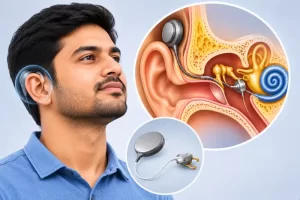
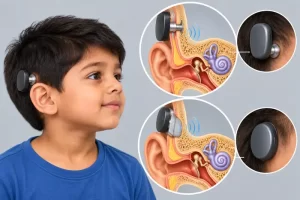
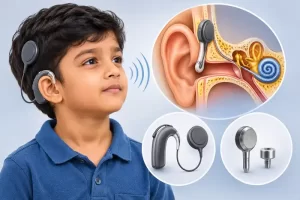
The ABI system has an internal electrode array surgically placed on the brainstem, with an external sound processor worn behind the ear. Although hearing outcomes vary by patient, several people using the ABI system have reported greater awareness of their surroundings, improved speech detection and lip-reading, and, as a result, improved communication abilities.
ABI surgery and rehabilitation are complex procedures and thus require a highly specialized multidisciplinary approach involving ENT surgeons, neurosurgeons, audiologists, speech therapists, and rehabilitation specialists.
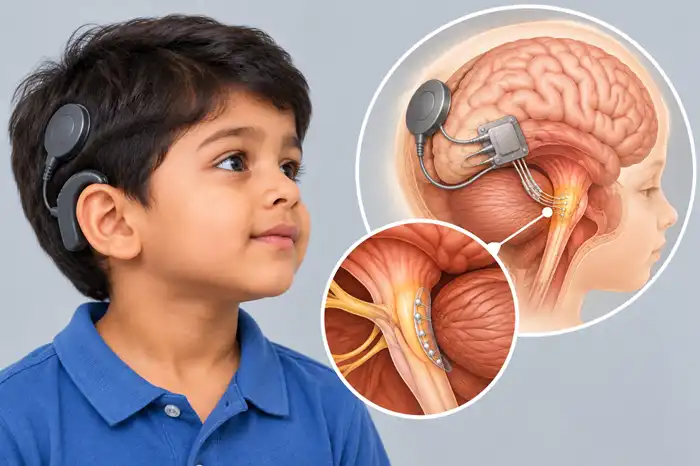
ABI can be recommended for selected patients with severe and profound hearing loss who are not appropriate candidates for Cochlear Implant surgery.
The most common candidates are:
A thorough investigation must be conducted before considering surgery for the ABI.
The ABI system bypasses the defective hearing structures, thereby directly stimulating the auditory pathways in the brainstem.
The ABI system consists of:
The captured sound is then processed, and electrical impulses are generated to stimulate the brainstem’s hearing pathways.
Patients requiring an ABI may be suffering from poor communication skills due to the profound loss of their hearing.
The common symptoms may include:
A thorough evaluation is needed to identify the eligibility and candidacy of patients requiring ABI surgery.
The tests performed during the evaluation stage include:
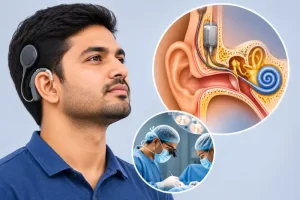
The Auditory Brainstem Implant (ABI) surgery is a complex, highly specialized procedure performed under general anesthesia and often carried out in collaboration with the neurosurgical team.
The surgical team creates access to the brainstem through an expert skull-base surgical procedure and then places the electrode array in the area around the brainstem’s cochlear nucleus, with the internal receiver beneath the skin. An intraoperative check is also performed to ensure the electrode is correctly placed. The surgery is delicate and requires expertise in this procedure, along with detailed postoperative observation.
Once the ABI has been implanted and the surgical wound has healed (normally a few weeks after surgery), the external sound processor is activated. The patient then goes through the activation and rehabilitation phase.
Rehabilitation Includes:
The process of interpreting the new sound signals generated by the device is ongoing, spanning weeks and months and requiring continuous rehabilitation.
Although hearing outcomes vary among patients, there are numerous benefits to using an ABI.
Common Benefits include:
Young children who receive early ABI support show improved communication and speech development.
Since ABI surgery requires an expert touch to the brainstem, it is very important that the surgery be performed by highly experienced professionals and that the patient is closely monitored postoperatively.
Possible Complications may include:
Close monitoring, along with the right rehabilitation approach, will further enhance the patient’s success with their ABI system.
With an ABI system installed in your body, you will need continued rehabilitation and follow-up services with your ENT doctor or audiologist.
Follow-Up and Lifestyle Considerations:
With proper rehabilitation and support, the patient’s life will be dramatically improved by the implant.
LIKITA ENT Hospital is a trusted ENT Centre for Auditory Brainstem Implant in Patna, Bihar, India, providing specialized assessment for patients with severe to profound hearing loss who may not benefit from conventional hearing aids or cochlear implants. Our ENT specialists focus on comprehensive hearing evaluation, careful assessment of auditory nerve function, and individualized treatment planning to determine the most appropriate hearing rehabilitation options. With detailed diagnostic investigations, multidisciplinary coordination with neurosurgical and audiology teams when required, and dedicated postoperative rehabilitation and follow-up care, LIKITA ENT Hospital aims to support sound awareness, communication abilities, and quality of life for eligible patients. ABI candidacy and expected outcomes are assessed individually, as this complex procedure requires specialized expertise and long-term rehabilitation.