Even when hearing is typically normal, auditory processing disorder (APD) is an abnormal condition in which the brain has trouble processing sounds. The affected individual hears sounds normally but struggles to listen to and process speech, particularly in noisy environments. They may also have difficulty processing auditory information, recognizing subtle sounds, and following verbal instructions.
Auditory processing is quite complex, as it requires specific brain mechanisms to properly interpret sounds and their meanings. When there are problems with the auditory pathways or the brain centers, the ability to understand sound and language may be compromised. Therefore, Auditory Processing Disorders can affect communication, learning, behavior, school performance, and everyday activities.
APD is generally identified among people who experience learning difficulties, communication problems, and difficulty comprehending spoken language in noisy environments, which usually affects young children but can equally affect some adults, depending on their injuries, health problems, or even the aging of the auditory system.
Auditory processing impairments are evaluated and treated by an interdisciplinary team that includes ENT specialists, audiologists, speech-language pathologists, auditory rehabilitation specialists, educational personnel, and families.
A comprehensive evaluation will facilitate the diagnosis of specific auditory processing problems and aid in the design of a rehabilitation program.
Neuro-audiology and auditory rehabilitation use specific auditory processing tests and proven treatment strategies to address listening abilities, speech perception, auditory attention, language learning, and communication.
Proper assessment and early intervention will greatly improve the academic achievements, communication abilities, and social integration of individuals with auditory processing disorders.
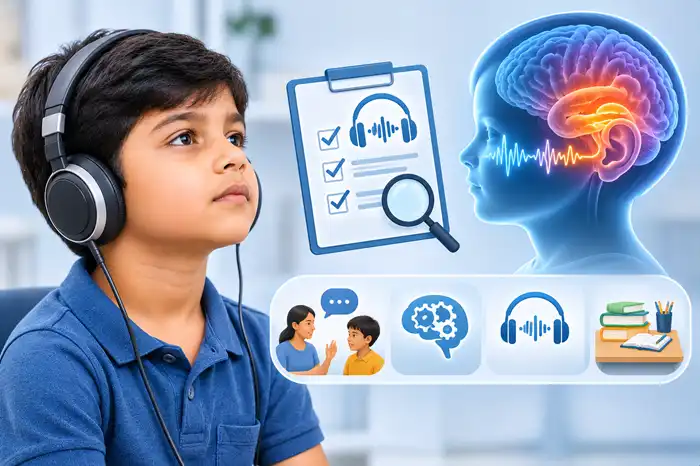
Auditory Processing Disorder refers to difficulties the brain has in interpreting auditory information, even when hearing is normal.
Symptoms of Auditory Processing Disorder:
The problems are associated with the brain’s auditory processing.
There can be many different causes, varying from one individual to another.
Contributing Causes May Include:
Sometimes it can be difficult to determine the cause of APD.
The signs depend largely on the extent and type of auditory processing disorder experienced.
Signs Can Include:
Children with APD might look distracted in school classrooms.
Assessment is essential for understanding the nature of the auditory processing problem.
Assessment Will Help:
Early identification helps to facilitate auditory rehabilitation and education.
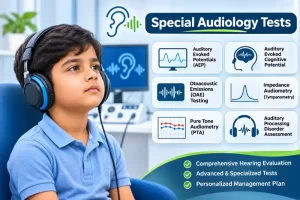
The tests will consist of a comprehensive hearing and neuro-audiological assessment.
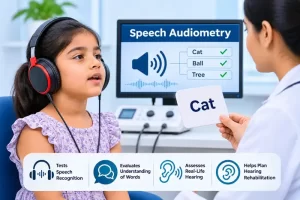
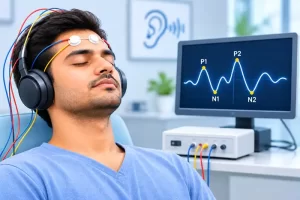
Tests for auditory processing disorder diagnosis may include the following:
Specialized auditory processing tests will be administered to assess auditory processing ability.
Various auditory abilities are tested during diagnosis.
This includes the following:
Identification of these auditory abilities helps formulate an individual treatment plan.
Management is based on improving listening and language skills.
Management Approaches Involve:
Rehabilitation based on individual needs is effective in improving communication and learning abilities.
Through auditory exercises, we can develop sound-processing skills in the brain.
Therapy Involves:
Repeated practices improve auditory pathways over time.
Patients who have been diagnosed with APD also need speech-language therapy.
Therapy Helps With:
Improvement of educational and communication skills through rehabilitation.
Students with APD often require special classroom adjustments.
Effective Methods Can Be:
Improving educational participation.
It is possible to significantly improve your communication and learning.
Managing APD in Time Will:
Regular therapy and support help reach positive results.
Family involvement is necessary for successful recovery.
Your Family Can Help by:
Having a supportive family contributes to better auditory learning.
LIKITA ENT Hospital is a trusted ENT Centre for Auditory Processing Disorder (APD) assessment and management in Patna, Bihar, India, providing specialized evaluation for children and adults experiencing difficulty understanding speech, following verbal instructions, processing sounds in noisy environments, and developing effective communication skills. Our ENT specialists focus on comprehensive hearing assessment, detailed evaluation of auditory processing difficulties, and individualized management planning based on each patient’s listening, language, and educational needs. With appropriate audiological investigations, specialized auditory processing assessments when indicated, auditory training, speech and language therapy, educational guidance, and family counseling, LIKITA ENT Hospital aims to support better listening comprehension, communication abilities, learning participation, and confidence. Ongoing monitoring and personalized rehabilitation help address individual challenges and support progress over time.