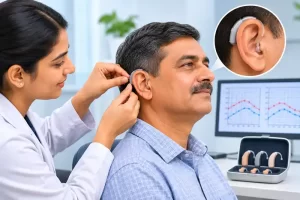
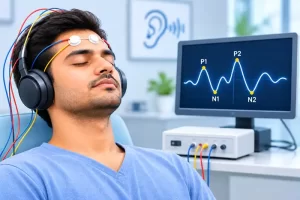
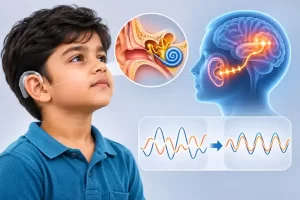
Special Audiology Tests are advanced hearing examinations conducted to assess specific auditory conditions. The purpose of such specialized tests is to assist ENT practitioners and audiologists in diagnosing complex auditory impairments and nerve-based hearing problems, fitting hearing aids, assessing patients’ sound tolerances, and developing appropriate hearing rehabilitation programs. These audiological tests are useful for identifying inner-ear diseases, retrocochlear lesions, auditory nerve disorders, and difficulties with speech perception.
Although standard hearing tests like Pure Tone Audiometry and Speech Audiometry provide basic information on auditory sensitivity and speech comprehension, specialized audiological tests yield extensive data on the functioning of the auditory system. Specialized tests can help determine the physiological condition of the cochlea, auditory nerve, and the central auditory pathway.
Patients with conditions such as tinnitus, sudden hearing loss, auditory fatigue, speech-understanding impairment, sound sensitivity, balance disorders, cochlear disorders, or hearing-aid-related auditory issues may need these advanced audiological tests. Special tests play an essential role in hearing rehabilitation, cochlear implantation, job-related hearing assessment, and auditory process analysis.
Modern audiology clinics apply advanced diagnostic equipment and acoustic testing rooms to conduct this type of examination accurately. The results obtained will assist in providing treatment for an individual, hearing aid fittings, rehabilitation, and long-term auditory health care.
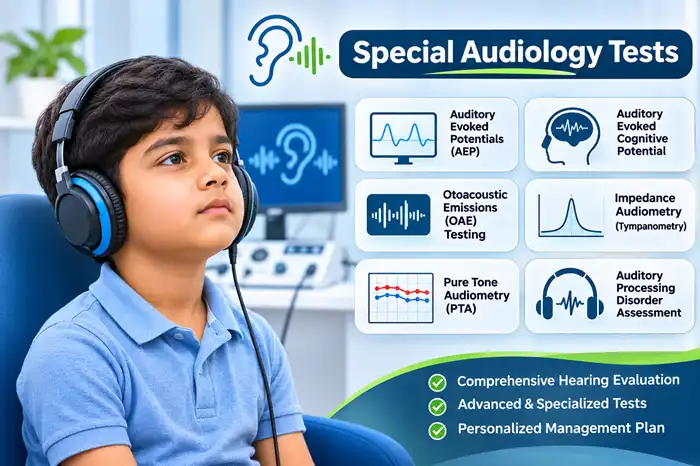
Among the special audiologic procedures conducted are the following tests:
All these tests give useful information about auditory system functions and auditory sensitivity.
This test is used to assess auditory nerve fatigue and to detect retrocochlear disorders affecting the auditory nerves.
During the test, a sound is generated at a certain intensity level. Afterward, the person tells whether he or she hears this tone throughout the test time period. Inability to hear a sustained tone is a sign of auditory nerve problems.
It helps evaluate:
The test is administered in an audiological context and is entirely painless and safe.
The Short Increment Sensitivity Index (SISI) Test tests the ability of an individual to perceive minute variations in sound levels.
It is particularly important for identifying hearing impairments in the inner ear, or cochlea.
The test aids in diagnosing:
Individuals suffering from cochlear pathology have greater sensitivity to changes in loudness than healthy individuals.
The SISI test offers essential information about the functioning of the inner ear.
The difference between the loudest sound a person can comfortably tolerate and the faintest sound they can discern is known as dynamic range.
A person with a hearing impairment may have a reduced dynamic range, which can affect their communication and hearing aid tolerance.
It is useful to find out:
It is essential to perform dynamic range testing when fitting hearing devices.
LDL stands for Loudness Discomfort Level (LDL). It defines the level of sound a patient perceives when it begins to cause discomfort.
This test is done to measure patients’ tolerance to sound.
Patients for whom LDL tests are done include those who suffer from:
A precise LDL test increases the chances of successful hearing rehabilitation.
The Uncomfortable Loudness Level (UCL) test measures the maximum sound intensity that causes pain or discomfort.
It helps establish safe listening levels in hearing rehabilitation.
It helps with:
Assessment of UCL is especially necessary in people with sensorineural hearing loss and tinnitus.
They help provide additional insights into the processes underlying hearing function.
They Help With:
Timely and accurate hearing evaluation ensures good hearing results and communication capabilities.
LIKITA ENT Hospital is a trusted ENT Centre for special audiology tests in Patna, Bihar, India, providing specialized hearing assessment support for children and adults experiencing tinnitus, sudden hearing changes, sound sensitivity, difficulty understanding speech, auditory fatigue, or hearing aid-related discomfort. Our ENT specialists focus on comprehensive audiological evaluation and selecting appropriate diagnostic tests according to each patient’s hearing condition and clinical needs. Specialized assessments such as the Tone Decay Test, Short Increment Sensitivity Index (SISI) Test, Dynamic Range Measurement, Loudness Discomfort Level (LDL), and Uncomfortable Loudness Level (UCL) may help evaluate auditory nerve function, cochlear-related hearing difficulties, and sound tolerance when clinically indicated. LIKITA ENT Hospital aims to support accurate assessment, informed hearing aid fitting and adjustment, appropriate rehabilitation planning, and further evaluation when required. Personalized recommendations and follow-up guidance help patients better understand their hearing needs and work toward improved listening comfort, communication, and quality of life.