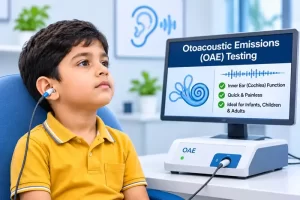
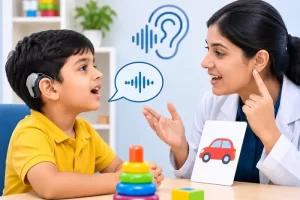
Auditory Dyssynchrony, also called Auditory Neuropathy Spectrum Disorder (ANSD), is an auditory impairment in which sounds reach the inner ear normally, but the brain’s ability to receive auditory nerve signals is compromised. People with this condition may have trouble comprehending spoken language because sound transmission to the brain is impaired.
Sound signals that reach the auditory nerve under normal conditions should do so in a synchronized fashion from the cochlea to the brain. In Auditory Dyssynchrony, there is a disruption in the synchronization process, resulting in the delivery of auditory information in a distorted or poorly coordinated way. Speech understanding, listening abilities, language acquisition, and other auditory functions are thus affected.
Auditory Dyssynchrony occurs in both children and adults and can also affect newborns. Causes of this condition include early births, neonatal difficulties, jaundice, inherited disorders, neurological issues, malfunctioning of the auditory nerves, or abnormalities of the inner ears. The patient may suffer from minor or serious communication problems due to Auditory Dyssynchrony.
It usually requires an audiology-neurology evaluation, as simple hearing tests cannot detect the condition. It can be helpful for evaluating the condition by assessing auditory function, auditory nerve conduction, listening ability, and synchrony of the auditory system.
Treatment of Auditory Dyssynchrony consists of individual rehabilitation management plans. It might require hearing aids, cochlear implants, auditory training, speech therapy, communication therapy, special education, and auditory rehabilitation. Children with this condition need early diagnosis and treatment to develop proper speech and language skills.
Through cutting-edge diagnostic techniques and extensive rehabilitation programs, current neuro-audiology services provide patients with Auditory Dyssynchrony with improved auditory performance and an improved quality of life.
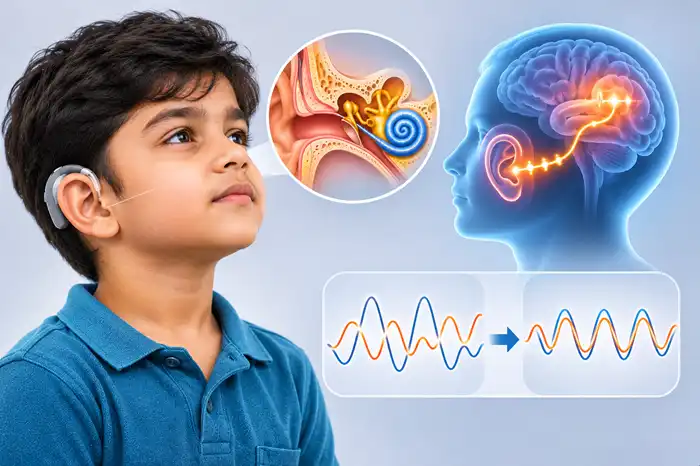
A hearing impairment called auditory dyssynchrony is typified by poor sound transmission from the inner ear to the auditory nerve system.
Condition Features:
Patients can hear sounds but find it difficult to comprehend words.
There may be multiple possible causes for this condition.
Possible Causes Are:
In some instances, there may be no obvious cause of the condition.
Symptoms may depend on the severity of the dysfunction in the auditory nerves.
Common Symptoms Are:
Patients may appear inattentive because they cannot perceive speech.
Diagnosis of this condition is extremely important in babies and small children.
Early Diagnosis Can Help With:
A comprehensive neuro-audiological evaluation is necessary for proper diagnosis.
Diagnostic tests may include:
Auditory Dyssynchrony shows evidence of an abnormal auditory nerve response with intact outer hair cells in the cochlea.
Tests like OAE and ABR play a vital role in the diagnosis of Auditory Dyssynchrony.
It depends on the level of hearing and communication problems.
Treatment methods include:
Individual rehabilitation is necessary for success in communication.
The use of hearing aids could help some people, but results would vary.
Hearing Aids Help Through:
Regular assessment of hearing aids should be performed to evaluate their efficiency.
The use of cochlear implants can provide considerable help to some patients with severe hearing disabilities.
Cochlear Implants Help in:
Evaluating cochlear implantation helps plan appropriate treatment.
Rehabilitation therapy plays an essential role in treatment.
Rehabilitation Could Be:
Effective rehabilitation therapy leads to better speech recognition and the ability to speak and understand.
Children with auditory dyssynchrony usually need multidisciplinary assistance.
Assistance Techniques Include:
Supportive environments enhance auditory learning and communication performance.
Monitoring of hearing and hearing rehabilitation procedures is necessary.
Benefits of Follow-Up Include:
Continuous care results in enhanced quality of life and the development of hearing skills.
LIKITA ENT Hospital is a trusted ENT Centre for Auditory Dyssynchrony (Auditory Neuropathy Spectrum Disorder) evaluation and management in Patna, Bihar, India, providing specialized assessment and rehabilitation planning for children and adults experiencing hearing difficulties, poor speech recognition, delayed language development, and communication challenges. Our ENT specialists focus on comprehensive audiological evaluation, careful interpretation of diagnostic tests such as OAE and ABR, and individualized treatment planning based on each patient’s hearing abilities and communication needs. With appropriate hearing assessments, evaluation for hearing aids or cochlear implants when indicated, auditory training, speech and language therapy, family counseling, and dedicated long-term follow-up, LIKITA ENT Hospital aims to support improved listening skills, communication development, and quality of life. Treatment and rehabilitation recommendations are tailored to each patient’s condition, response to intervention, and developmental goals.