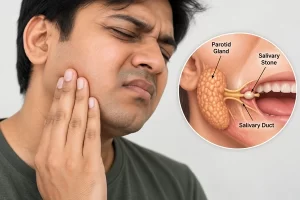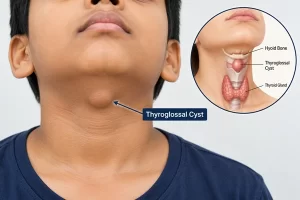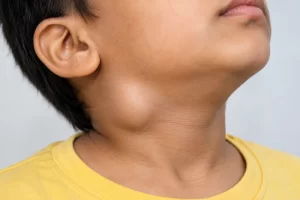
Lymphangioma is a rare birth defect of the lymphatic system. It’s an abnormality that results in tissue swelling due to the collection of lymphatic vessels, forming fluid-filled or cyst-like masses. Lymphangioma is either present at birth or develops in the first couple of years of life. As is the case with most birth defects of the head and neck region, the lump caused by the lymphangioma may, depending on the degree of development, obstruct breathing, eating, and speech, and cause deformity. Lymphangioma is benign (non-cancerous); however, it may grow slowly over time or enlarge suddenly when associated with infection or bleeding within the mass. Some masses are small and are painless, but very large ones can compromise the airway, tongue, throat, or salivary glands. A good early examination and an ENT evaluation are essential to determine the extent and type, and subsequent management is guided by these factors and symptoms. Modern imaging technologies and treatments offer a range of options that yield highly favorable functional and cosmetic outcomes for most children and adults.
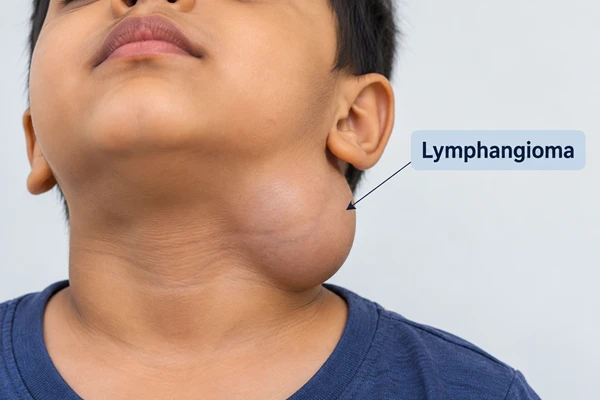
Lymphangioma results from abnormal development of the lymphatic vessels. This is why the problem is congenital.
Possible Contributing Factors:
Lymphangioma is congenital, so it cannot be caused by infection or lifestyle-related factors.
Symptoms depend on the size of the lymphangioma, its location, the extent of its invasion, and whether any infection or bleeding has occurred.
Symptoms may include:
If infection or bleeding has occurred, the swelling can appear to increase quite suddenly.
Lymphangiomas are categorized according to the size of the lymphatic channels:
Diagnosis of lymphangioma will be based on assessment of the lesion’s extent, size, and location.
Methods for the Diagnosis of Lymphangioma:
The investigation will assist the ENT specialists in planning safe and appropriate management.
The size of the lymphangioma and the severity of the symptoms will determine the treatment method.
In many cases where a small, symptomless lump is present, observation is all that is required.
If the lymphangioma becomes infected, this should be treated appropriately with antibiotics. Severe or life-threatening swelling or breathing problems require admission to the hospital for monitoring and support, such as intubation.
This is a treatment in which specialized medication is injected into the lesion to help shrink the abnormally formed lymphatic spaces. This may require more than one procedure and should be performed by a doctor experienced in these treatments.
In most cases, when the symptoms are severe (e.g., impacting breathing or feeding), surgery is required. Large lumps are often too large to be removed completely in a single procedure, and they can also pose a risk of recurrence after removal of abnormal tissue.
Aims of the Operation:
Nowadays, the treatments employed in surgical procedures for lymphangiomas of the head and neck region make them far safer, with less post-operative morbidity. Modern methods, such as minimally invasive surgical techniques and image-guided therapies, play an integral role in the successful removal and management of lymphangiomas.
If treatment for lymphangioma is delayed or if lymphangioma is left untreated, there is a greater likelihood of complications arising:
The sooner an early intervention is provided, the lower the risk of long-term complications.
Lymphangioma is not usually preventable, as it is congenital, but its consequences can be.
How to Help with Prevention?
Most children and adults with lymphangioma enjoy a healthy life after treatment, with ongoing monitoring by a doctor or consultant specialist.
Important tips for the patients and parents are:
Likita ENT Hospital offers safe and effective Lymphangioma Treatment in Patna, Bihar, India, at an affordable cost. Our team of experienced ENT specialists provides accurate examination and diagnostic assessment to identify the size, location, and extent of the lymphangioma and evaluate its effect on nearby structures. Treatment is tailored according to the patient’s age, size and location of the lesion, symptoms, growth, and individual needs, with appropriate care provided for children and adults. When required, our ENT specialists can manage associated neck swelling, difficulty breathing or swallowing, infection, pain, or compression of nearby structures and recommend suitable treatment options, including observation, sclerotherapy, or surgical removal when appropriate. With advanced ENT diagnostic facilities, experienced specialists, and a patient-focused approach, Likita ENT Hospital is committed to providing safe, precise, and comfortable Lymphangioma Treatment in Patna, Bihar, India.