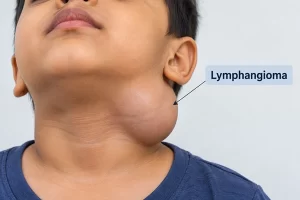
A branchial cyst is a condition present since birth that arises in the neck due to the failure of certain embryonic tissues to disappear. In childhood, it is typically observed as a soft, painless bump on the side of the neck, and in adolescence or early adulthood. Though branchial cysts appear at birth, they may not become apparent until later in life when they begin to grow or become infected.
They are not cancerous but can present problems such as pain, infections that repeat frequently, discharge in the neck, cosmetic disfigurement, and difficulty with swallowing if very large. In cases of infection, the cyst becomes painful, red, and tender. In some cases, a sinus tract or fistula may develop, where the cyst connects to the skin on the outside of the neck.
To treat branchial cysts, proper diagnosis is essential, as they can be misdiagnosed as similar masses or lymph nodes. A surgical removal of the cyst becomes imperative in order to avoid reinfection.
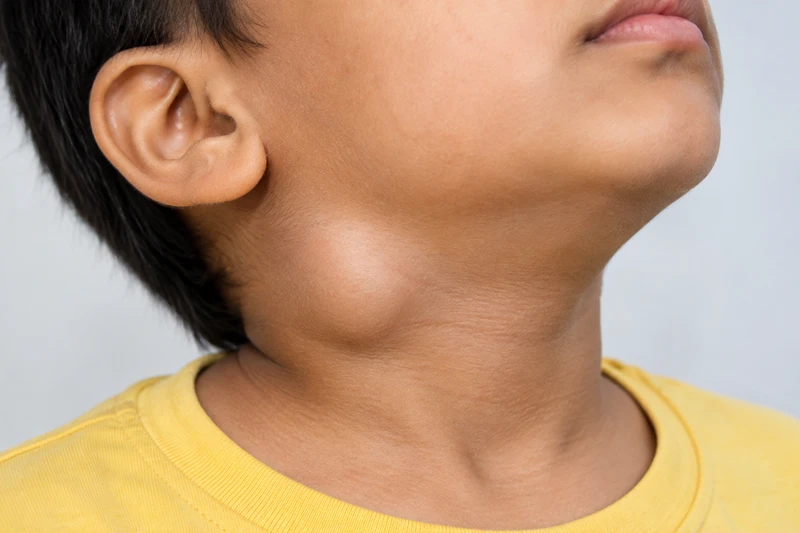
Branchial cysts are congenital defects that form during fetal development.
Factors Include:
They are not the result of environmental or lifestyle factors.
The specific symptoms of a branchial cyst vary depending on its size and whether an infection is present.
Symptoms Can Include:
The swelling may increase if a patient has an upper respiratory infection.
Branchial arch abnormalities are grouped depending on which arch they arise from:
A definitive diagnosis is important, as many other neck masses and enlarged lymph nodes can present similarly to branchial cysts.
Diagnostic Methods Include:
These investigations will help an ENT specialist formulate the best treatment plan.
The appropriate treatment for branchial cysts will depend on whether infection is present and on the size and nature of the abnormality.
In most cases, complete excision of the branchial cyst is the only appropriate course of action.
Goals of Treatment are:
Modern surgical techniques are used to ensure the quickest and safest possible recovery and the least possible scarring.
Branchial cyst complications may arise from inadequate management, leading to neck infection and pain.
They may include:
Early, timely intervention by a professional will significantly reduce these risks.
Branchial cysts are congenital abnormalities and, as such, cannot really be prevented. Early and effective management of a branchial cyst will help prevent long-term complications arising from a neck infection that persists or recurs.
Effective prevention is attained through:
ENT specialists can provide optimal care when a branchial cyst is detected early.
The vast majority of patients fully recover after surgical excision of the branchial cyst.
Tips for the Patient and Parents of the Child are:
Long-term outcomes are generally good with proper treatment and specialized care.
Last Updated: September 15, 2026
Likita ENT Hospital offers safe and effective Branchial Cyst Treatment in Patna, Bihar, India, at an affordable cost. Our team of experienced ENT specialists provides accurate neck examination and diagnostic assessment to identify the size, location, and nature of the branchial cyst and evaluate its effect on surrounding structures. Treatment is tailored according to the patient’s age, size and location of the cyst, symptoms, presence of infection, and individual needs. When required, our ENT specialists can manage associated neck swelling, pain, redness, infection, tenderness, or recurrent cyst-related problems and recommend suitable medical or surgical treatment, including complete surgical removal when appropriate. With advanced ENT diagnostic facilities, experienced specialists, and a patient-focused approach, Likita ENT Hospital is committed to providing safe, precise, and comfortable Branchial Cyst Treatment in Patna, Bihar, India.