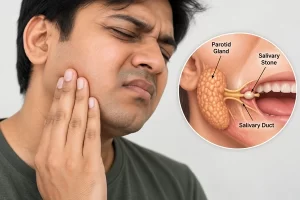
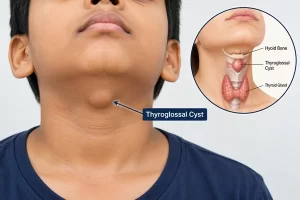
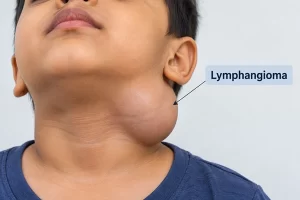
The largest of our salivary glands, the parotid glands, are positioned on either side of our face, just in front of the ears. These glands produce saliva, which assists in chewing, swallowing, digestion, and maintaining oral hygiene. Problems with the parotid glands can cause swelling and pain, mouth dryness, infections, difficulty chewing, or a lump or tumor.
Parotid gland diseases can be encountered in both adults and children, and they range from minor infections to inflammatory processes and tumors, which are chronic or acute, with some occurring quickly as a bacterial or viral infection and others growing at a slower rate due to duct blockage, stones, autoimmune conditions, or tumor growth. The parotid gland is traversed by the facial nerve; to preserve the nerve and maintain facial function, an accurate diagnosis and appropriate treatment are crucial. ENT specialists use specialized methods to diagnose and treat diseases of the parotid glands. As a result, patients quickly recover without loss of gland function.
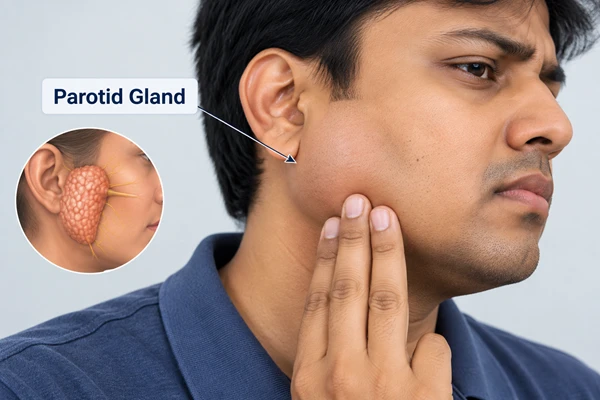
A number of diseases can affect the parotid gland:
Understanding which of these conditions the correct diagnosis is will help to identify the relevant management.
Possible causes of parotid gland disease include infection, obstruction of the salivary duct system, inflammation, or tumor. Yet the most common causes include:
Some conditions develop over a long period without significant symptoms.
The person’s symptoms may be determined by the disorder affecting the parotid gland. These symptoms include:
A noticeable lump on the jaw or recurrent pain/ swelling requires prompt medical attention.
In order to accurately diagnose the exact condition and the degree of severity of the disease it causes, several investigations will usually be necessary to facilitate prompt and appropriate diagnosis:
These investigations are extremely important and will assist the ENT consultant in planning for medical treatment or surgical intervention.
The treatment approach for a specific parotid gland disease will vary, and it is often the only way to achieve the desired results.
If there are tumors or recurrent infections, or if the gland has been seriously damaged, surgical removal may be indicated.
Advanced surgical methods focus on safely removing the gland while sparing the facial nerve.
Parotid gland diseases, left untreated, can become life-threatening. Potential complications are:
While some conditions cannot be prevented, several lifestyle habits will reduce the risk of developing parotid gland disorders:
Early consultation with a doctor for this swelling can prevent chronic effects and ensure continued function.
Most parotid gland conditions can be successfully treated and controlled with the right intervention and ongoing care. The following key advice is given to patients:
The combination of appropriate treatment and ongoing support will result in improved gland function and reduced symptoms.
Likita ENT Hospital offers safe and effective Parotid Disorder Treatment in Patna, Bihar, India, at an affordable cost. Our team of experienced ENT specialists provides accurate examination and diagnostic assessment to identify the type, size, and location of the parotid gland problem and evaluate its effect on surrounding tissues and facial nerve function. Treatment is tailored according to the underlying condition, severity of symptoms, age, and individual patient needs. When required, our ENT specialists can manage associated swelling near the ear or jaw, pain, infection, salivary gland blockage, recurrent inflammation, or parotid gland masses and recommend suitable medical, minimally invasive, or surgical treatment when appropriate. With advanced ENT diagnostic facilities, experienced specialists, and a patient-focused approach, Likita ENT Hospital is committed to providing safe, precise, and comfortable Parotid Disorder Treatment in Patna, Bihar, India.