Septoplasty is a type of nasal surgery that corrects a deviated nasal septum, a condition in which the nasal wall between the nasal cavities is misaligned. A perfectly formed septum runs straight down the middle, ensuring two equal, clear airways. A deviated septum, however, can lead to the blockage of nasal breathing passages and the onset of such problems as difficulty breathing through the nose, nasal congestion, recurrent sinus infections, snoring, and disturbed sleep.
Septal deviations can result from a congenital nasal deformity (developing naturally as you grow) as well as from damage sustained through an accident or injury to the nose. Whilst some mild septal deviations are symptomless, those that significantly affect your breathing can be treated.
The objective of septoplasty surgery is to straighten the nasal septum, increase the space in your nasal passages, and restore effective nasal breathing. Generally, the procedure is performed using minimally invasive endoscopic techniques and without altering the external appearance of the nose, unless a cosmetic rhinoplasty is also undertaken.
Modern endoscopic septoplasty techniques yield good results and offer significant benefits for nasal airway breathing, sleep quality, sinus drainage, and overall patient quality of life.
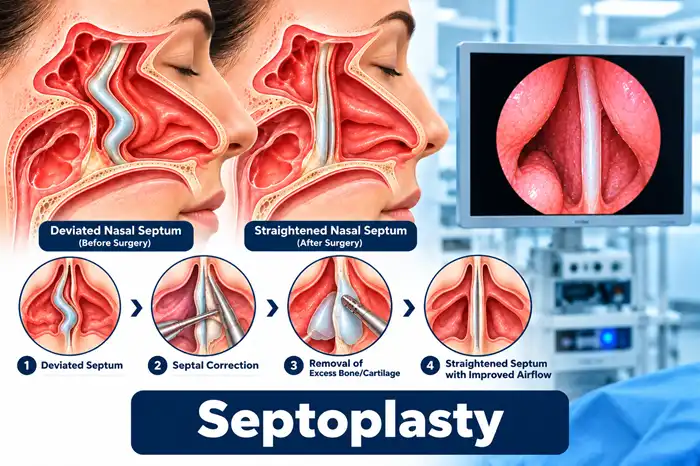
Septoplasty surgery is typically suggested when one experiences symptoms due to deviation of the nasal septum.
Indications for Septoplasty Surgery
Indications for septoplasty surgery usually include:
• Persistent nasal obstruction
• Problematic breathing through the nose
• Sinus infections that persist
• Snoring and sleep problems
• Nasal congestion
• Nosebleeds resulting from an irritated septum
• Nasal obstruction leading to discomfort in the face/ head
• Problem breathing during exercise and while sleeping
If chronic nasal symptoms do not improve with medications, surgery may be a suitable option to address an underlying deviated nasal septum.
Numerous factors can lead to a deviated nasal septum.
Common Causes of a Deviated Nasal Septum
• Congenital nasal deformity
• Birth-related nasal injury
• Trauma to the nose (injury)
• Sports-related nasal injury
• Road traffic accident-related nasal injury.
• Normal nasal structural changes that occur with increasing age
Some individuals’ septa naturally shift throughout childhood.
By preventing normal airflow through the nose, a deviated septum can disrupt the nose’s and sinuses’ normal function.
Common Symptoms of a Deviated Septum
Some common signs and symptoms related to a deviated septum include:
• Difficulty breathing through either side of the nose or through both sides
• Blocked nose
• Sinus infections
• Sleep disturbances
• Mouth breathing
• Bleeding from the nose
• Pressure in the face due to nasal congestion
• Headache caused by the nasal blockage
• Mild loss of smell
Symptoms tend to worsen if you have an allergy or an infection, or if you are experiencing colder weather.
Accurate diagnosis of your deviated nasal septum prior to surgery is important in treatment planning.
Diagnostic Evaluation for Deviated Nasal Septum
Diagnosis involves the following:
• Careful ENT examination
• Nasal endoscopy
• Assessment of airflow restriction in the nasal passage
• Evaluation of the sinus disease
• For some situations – CT of the nose & sinuses
• If necessary, allergy assessment
Investigations such as these help diagnose the severity of a deviated nasal septum and associated problems of the nasal passages.
Septoplasty is often carried out under general or local anesthesia, utilizing modern endoscopic surgery techniques.
General Outline of Septoplasty Surgery
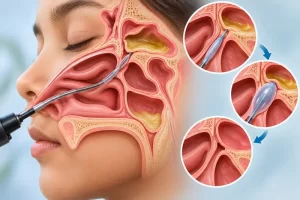
• Access to the nasal septum via the nostril.
• Delicate lift of the nasal lining.
• Remove/reposition cartilage and bone causing the deviation in the septum.
• *Straighten the septum.
• Preservation of the remaining healthy nasal structures and airway.
• Securing the corrected nasal septum.
Since this is a purely internal procedure, there will be no external scars on the face or nose.
Endoscopic surgical techniques offer significantly reduced levels of trauma and risk during surgery, lower risk of bleeding, and provide a quicker recovery than other forms of septoplasty surgery.
It is sometimes useful to combine septoplasty with additional nasal treatment.
Common Procedures That May Be Combined With Septoplasty Surgery
• Functional Endoscopic Sinus Surgery (FESS)
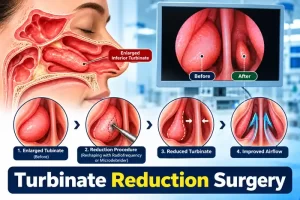
• Turbinate reduction surgery
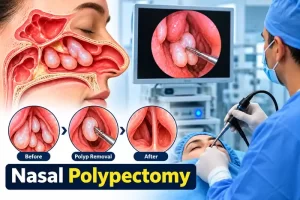
• Nasal polyps removal surgery
• Rhinoplasty surgery
• Snoring and sleep apnea surgery
Combining nasal surgery helps not only improve nasal airways but also restore proper nasal and sinus function.
Most patients undergoing septoplasty recover fully within a few weeks of the procedure. Follow the following instructions:
Postoperative Care After Septoplasty
• Avoid blowing your nose during the initial phase of post-operative recovery.
• Taking all prescribed medications and nasal sprays.
• Regular nasal saline irrigations will encourage effective healing of the nasal airway.
• Temporary avoidance of heavy physical exercise to allow healing to occur undisturbed.
• Follow-up ENT examinations with your surgeon.
Swelling, congestion, and general discomfort within the nose are normal and should subside gradually with healing of the nasal passage.
Septoplasty surgery is a particularly successful procedure for relieving chronic nasal airway symptoms.
Common Benefits of Septoplasty Surgery
• A dramatically improved flow of air through your nose.
• Much better breathing during both exercise and whilst sleeping.
• Reduced the occurrence of nasal sinus infections.
• Improved quality of sleep.
• Reduced levels of snoring.
• Relief of chronic nasal obstruction.
• A significantly enhanced overall quality of life.
Most patients undergoing septoplasty enjoy a lasting solution to their chronic nasal airway problems.
Whilst nasal surgery by septoplasty is considered to be a generally safe procedure, as with all surgery, certain complications may rarely occur:
Possible Risks and Complications of Septoplasty
• Bleeding from the nose
• Nasal infection
• Persistent nasal blockage due to scar formation within the nasal passage
• Septal perforation (a hole in the septum)
• Temporary lack of sensation in your upper teeth or on the tip of your nose.
• Septal adhesion (where two internal surfaces stick together)
• Minimal change to the outward appearance of the nose (a very rare event).
Ensuring the highest standards of surgical skill, coupled with careful postoperative care, is the best way to minimize potential complications of septoplasty.
After the nasal airway has healed, patients undergoing septoplasty often return to their normal daily routine.
Care Instructions After Septoplasty
Effective living after septoplasty relies on adherence to the following key care instructions:
• Do not hit or injure your nose postoperatively.
• Keep the inside of your nose clean.
• Take your nasal spray and pain medication as directed by your ENT surgeon.
• *Attend ENT follow-up appointments regularly as advised by your surgeon.
Treat any nasal infections or sinus complaints promptly.
A good follow-up treatment regimen should give you an enduringly improved nasal airway and healthy nasal passages.
LIKITA ENT Hospital is a trusted ENT Centre for Septoplasty in Patna, Bihar, India, providing specialized evaluation and surgical treatment for a deviated nasal septum, chronic nasal obstruction, difficulty breathing through the nose, recurrent sinus infections, snoring, and related nasal airway problems. Our experienced ENT surgeons use advanced nasal endoscopy and modern minimally invasive septoplasty techniques to precisely correct the deviated septum while preserving healthy nasal structures. With comprehensive diagnosis, individualized surgical planning, advanced endoscopic techniques, and dedicated postoperative follow-up, LIKITA ENT Hospital focuses on improving nasal airflow, supporting better breathing and sleep, reducing nasal symptoms, promoting smooth recovery, and achieving long-term nasal airway improvement.