Turbinate reduction is a specific nasal surgery performed to reduce the size of swollen turbinates, thereby opening the airway and relieving nasal breathing difficulty. Turbinates are structures made of tissue and bone found inside the nasal cavity that warm, humidify, and filter the air we breathe in. Swollen turbinates can lead to blocked airways, difficulty breathing through the nose, snoring/sleep disturbance, and recurrent sinusitis.
Enlarged turbinates, known as turbinate hypertrophy, may be due to allergies, chronic nasal inflammation, recurrent infection, environmental irritants, or even nasal deformities (such as a deviated nasal septum). Medications may help with short-term nasal congestion, and nasal sprays and tablets may even suffice. However, in extreme situations or when symptoms don’t go away after taking medication, surgery may be necessary.
Turbinate downsizing is the process of reducing the size of the turbinates while maintaining their crucial functions in filtration and air humidification. Modern minimally invasive approaches to turbinate reduction lead to less pain, a more rapid recovery, and the preservation of remaining nasal tissues. Turbinate reduction is usually combined with septoplasty or sinus surgery to improve all-around nasal breathing.
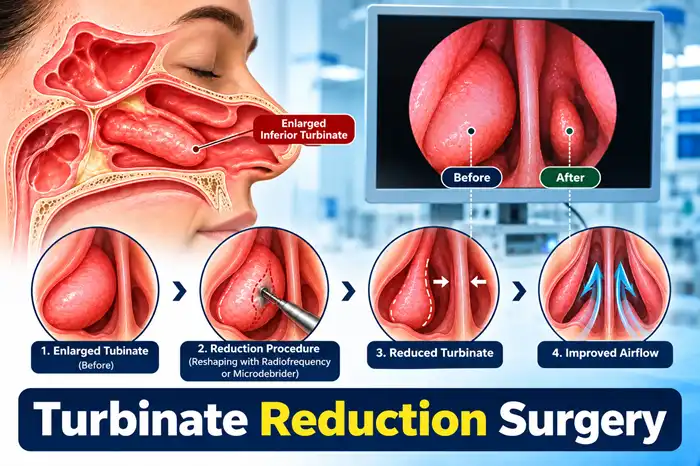
Nasal turbinates are curved nasal bones that are lined by the nasal lining. The turbinates include:
• Inferior turbinates
• Middle turbinates
• Superior turbinates
These inferior turbinates are most commonly enlarged, often leading to nasal airway obstruction.
Turbinate reduction surgery is beneficial to those who suffer from chronic nasal obstruction. Indications for turbinate reduction include:
• Nasal blockage
• Difficulty with nasal breathing
• Allergic rhinitis with hypertrophy of the turbinates
• Sinusitis
• Snoring
• Difficulty with sleeping
• Mouth breathing
• Nasal blockage not responsive to medications
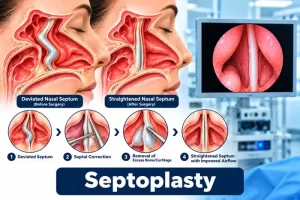
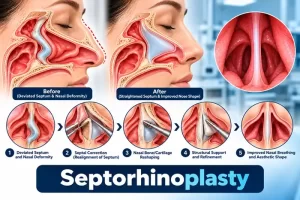
• Deviated nasal septum
Patients whose symptoms persist despite medication will usually need surgery to relieve blocked airways.
Many things cause turbinate hypertrophy. Some of the most common causes are:
• Allergic Rhinitis
• Sinusitis
• Environmental Irritants
• Recurrent Nasal Inflammation
• Deviated Septum
• Hormonal changes
• Overuse of nasal decongestants
Persistent irritation and inflammation of the nasal lining can cause enlarged turbinates.
Symptoms linked to turbinate hypertrophy can make breathing and sleeping difficult.
• Blocked nose
• Difficulty with nasal breathing
• Mouth breathing
• Snoring
• Sleep disruption
• Recurrent sinusitis
• Facial pressure
• Postnasal drip
• Loss of the sense of smell
• Dry or painful nose (sometimes)
Symptoms tend to be worse around allergy season and when you get a common cold.
An ENT examination should precede the surgical procedure on the turbinates, and the diagnosis usually includes:
• ENT Examination
• Nasal Endoscopy
• Assessment of Nasal Airway Obstruction
• Testing for Sinus and Allergies
• CT scans of the sinuses and nose are occasionally performed.
• Assessment for Deviated Septum and Nasal Polyps
These tests are designed to identify whether you have enlarged turbinates and to ascertain the severity of your nasal airway blockage and any related problems.
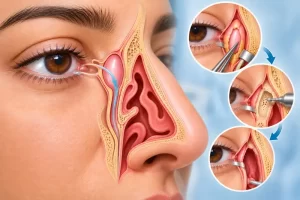
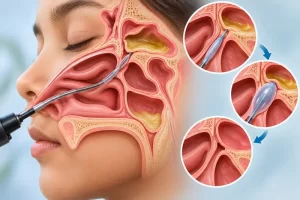
This surgery is generally minimally invasive; it is performed under local or general anesthesia and involves reducing enlarged turbinate tissue whilst preserving the nasal mucosa and improving the nasal airway.
• Reduction of enlarged turbinate tissue
• Preservation of the healthy mucosal lining
• Improvement in the nasal airway
• Minimal damage to the surrounding tissue and bleeding
• Radiofrequency turbinate reduction
• Turbinate reduction using a microdebrider.
• Submucous resection
• Turbinate surgery by laser
• Coblation turbinate reduction
These modern methods not only protect your surrounding nasal tissues but also provide an effective cure for nasal breathing problems.
Surgery can be performed along with other procedures to enhance outcomes:
• Septoplasty
• FESS (Functional Endoscopic Sinus Surgery)
• Nasal polyp removal
• Nasal procedures for allergies
• Sleep apnea surgery
Combined procedures result in greater improvement in the nasal airway.
It takes some time for you to recover fully following your turbinate reduction surgery. In all likelihood, you will be required to perform nasal irrigation, blow your nose with your mouth shut, and avoid exertion for the first few days. Regular ENT check-ups are important as your nose heals. You will likely experience some nasal obstruction and mild pain until swelling subsides.
The effects of turbinate reduction surgery include:
• Improved nasal breathing
• Reduction in nasal blockage
• Improvement of the quality of sleep
• Reduction in snoring
• Better sinus drainage
• Improved treatment response for allergies
• Increased quality of life
The surgery is designed to improve your breathing and, as a result, has many beneficial side effects.
There is a small risk of complications, such as bleeding or infection, though these are uncommon. Some individuals have reported the following:
• Bleeding
• Infection
• Nasal dryness
• Crusting in the nose
• Persistent nasal blockage (rare)
• Adhesion formation
There is also a very rare risk of over-reduction, which can result in a very dry nose. Surgical and post-operative care can minimize the chance of this occurring.
You will generally lead a normal life after surgery once your nose has recovered. Some important points regarding post-operative care are:
• Maintain a clean nose.
• Continue managing allergies if required.
• Avoid pollutants and cigarette smoke.
• Use saline sprays if necessary.
• Regular follow-up with your ENT doctor
A healthy lifestyle will ensure the best outcome from your surgery and can be continued for the rest of your life.
LIKITA ENT Hospital is a trusted ENT Centre for Turbinate Reduction Surgery in Patna, Bihar, India, providing specialized evaluation and treatment for enlarged turbinates, turbinate hypertrophy, chronic nasal obstruction, difficulty breathing through the nose, allergic rhinitis, snoring, and related nasal airway problems. Our experienced ENT surgeons use advanced nasal endoscopy and modern minimally invasive turbinate reduction techniques to reduce enlarged turbinate tissue while preserving healthy nasal structures and mucosal function. With comprehensive diagnosis, individualized treatment planning, appropriate surgical techniques, and dedicated postoperative follow-up, LIKITA ENT Hospital focuses on improving nasal airflow, reducing nasal blockage, supporting better sleep and breathing, promoting smooth recovery, and achieving long-term nasal airway improvement.