Facial palsy refers to the impairment of facial muscle movement on one side of the face resulting from an abnormality of the facial nerve. The facial nerve controls various facial movements, including eye closure, blinking, and smiling. Damage and inflammation of the facial nerve cause sudden facial paralysis, difficulty speaking clearly, difficulty protecting the eyes, etc.
The onset of the facial palsy is either sudden or gradual, based on the cause. A very common form of facial palsy is Bell’s palsy, which is mainly associated with viral inflammation of the facial nerve. Other causes of facial palsy include infection within the ears, injury, neurological diseases, the presence of tumors, stroke, etc.
The condition may affect appearance, speech, and eating, and may also have an emotional impact. Prompt diagnosis and management are key to ensuring recovery from the condition.
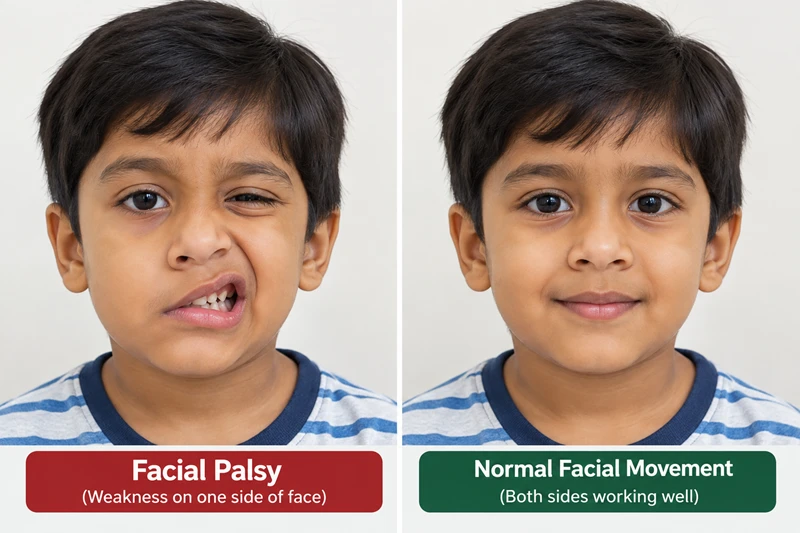
Facial palsy results from the inflammation of the facial nerve.
Causes Include:
Sometimes the exact cause is hard to determine.
Symptoms typically involve just one side of the face and start suddenly.
Symptoms Include:
Symptoms range from mild muscle weakness to total facial paralysis.
There are different types of facial palsy based on their causes and severity.
Knowing what kind of palsy you have will enable you to plan proper treatment.
An accurate diagnosis is important because it helps identify the condition’s severity and underlying cause.
Diagnostic Methods Involve:
These will help in the proper treatment plan and rehabilitation.
The treatment is based on the cause of your nerve problem and its seriousness.
Exercises that strengthen facial muscles can help improve nerve function.
Exercise Programs Consist Of:
Surgical Treatments May Consist Of:
Facial palsy recovery is often better when treatment begins early.
Facial palsy that goes untreated can result in complications affecting one’s body and mental well-being.
Facial Palsy May Cause:
Effective rehabilitation reduces complications associated with facial palsy.
Preventing facial palsy is difficult in many cases, though some steps can help mitigate risk.
Preventative Measures Include:
Timely diagnosis prevents complications related to facial palsy.
The degree of recovery from facial palsy depends on its cause and the severity of nerve damage.
Recommendations For Living With Facial Palsy:
Most people make a partial or complete recovery from facial palsy through proper treatment and rehabilitation.
Likita ENT Hospital offers safe and effective Facial Palsy Treatment in Patna, Bihar, India, at an affordable cost. Our team of experienced ENT specialists provides accurate facial nerve examination and diagnostic assessment to identify the possible cause and severity of facial weakness or paralysis and evaluate its effect on facial movement and related functions. Treatment is tailored according to the cause, severity, duration of symptoms, age, and individual patient needs. When required, our ENT specialists can manage associated facial weakness, difficulty closing the eye, altered taste, ear discomfort, or other related symptoms and recommend suitable medical, rehabilitative, or surgical treatment when appropriate. With advanced ENT diagnostic facilities, experienced specialists, and a patient-focused approach, Likita ENT Hospital is committed to providing safe, precise, and comfortable Facial Palsy Treatment in Patna, Bihar, India.