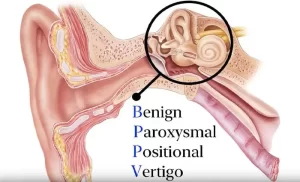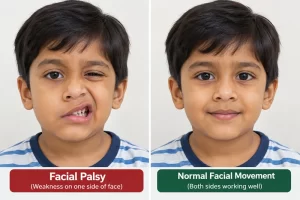
Vertigo is the experience of spinning, rocking, swaying, tilting, whirling, and motion when there is no actual physical motion involved. Vertigo does not stand alone; it is a symptom that arises from another issue involving the inner ear, the balance system, or the brain. Symptoms of vertigo include a sensation that the patient or their surroundings are spinning or moving. Patients who suffer from vertigo report feeling dizzy, disoriented, unsteady, and off-balance. Episodes of vertigo may be brief or last much longer.
As one of the most common complaints in neuro-otology, vertigo can significantly affect patients’ activities. Walking, driving, working, and living in general become challenging with vertigo, which is why an accurate diagnosis is vital for treatment. Vertigo symptoms may develop for a variety of reasons, ranging from simple inner-ear problems to serious neurological conditions.
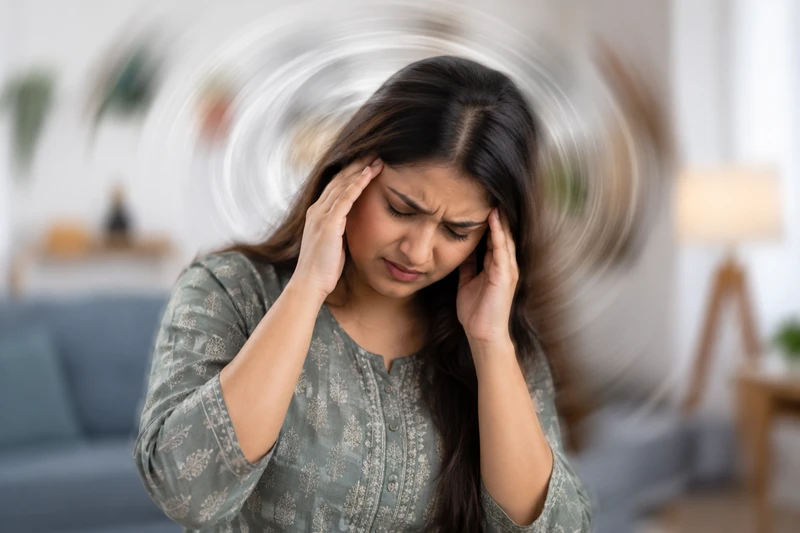
Vertigo frequently occurs due to a dysfunction of the inner ear’s balance system.
The reasons may be:
In most patients with vertigo, there is an underlying problem with their vestibular system, which regulates balance.
Depending on the precise cause and severity of the condition, vertigo symptoms can change .
Common Symptoms Are As Follows:
The symptoms tend to worsen with a sudden change in head position.
Vertigo can be differentiated into two types depending on the location of the affected area.
This type of vertigo involves disorders in the inner ear or vestibular nerves. Peripheral vertigo is quite common.
Common Causes Of Peripheral Vertigo Include:
This vertigo is caused by brain problems.
Common Causes Of Central Vertigo Include:
Accurate diagnosis is necessary, as vertigo can be caused by various factors that require different treatments.
Diagnostic Methods:
The above tests enable ear, nose, and throat (ENT) specialists to accurately identify the underlying cause of the dizziness and balance problems.
The treatment of vertigo largely depends on its cause, extent, and duration.
This treatment involves specific exercises to improve balance and reduce dizziness.
Exercise includes:
Specific exercises involving specific head positioning, such as the Epley maneuver, are quite effective in treating BPPV.
In rare situations, a surgical operation may be necessary for severe vertigo that does not respond to conservative treatment.
If vertigo is left untreated, it can significantly impact your daily life and safety.
Complications may arise in the form of:
Timely treatment ensures better security and well-being.
Not all kinds of vertigo may be preventable. However, there are strategies to lower the likelihood of getting them again, such as:
Medical supervision is crucial to managing recurring symptoms.
Patients with vertigo should practice caution to avoid dizziness and minimize the risk of falling.
Advice Includes:
A large number of individuals recover substantially following their diagnosis and subsequent rehabilitation.
Likita ENT Hospital offers safe and effective Vertigo Treatment in Patna, Bihar, India, at an affordable cost. Our team of experienced ENT specialists provides accurate ear and balance examination and diagnostic assessment to identify the possible cause of vertigo and evaluate its effect on balance and daily activities. Treatment is tailored according to the type, severity, frequency, and underlying cause of vertigo, along with the patient’s age, hearing status, and individual needs. When required, our ENT specialists can manage associated dizziness, spinning sensations, nausea, imbalance, hearing changes, tinnitus, or recurrent vertigo episodes and recommend suitable medical treatment, repositioning manoeuvres, vestibular rehabilitation, or other treatment options when appropriate. With advanced ENT diagnostic facilities, experienced specialists, and a patient-focused approach, Likita ENT Hospital is committed to providing safe, precise, and comfortable Vertigo Treatment in Patna, Bihar, India.