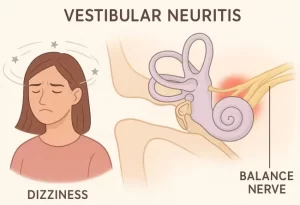
Meniere’s disease is an inner-ear disorder that leads to problems with hearing and balance. Meniere’s disease manifests as repeated episodes of vertigo, tinnitus, varying hearing loss, and ear fullness.
Meniere’s disease may begin with an episode in one ear but, in rare cases, spread to the other ear.
Ménière’s disease arises from increased fluid retention in the inner ear, leading to disturbances of the structures involved in the auditory and balance functions. The condition causes severe disruptions in the patient’s life because of dizziness attacks, concentration difficulties, imbalance, and anxiety. Although there is no known cure for Ménière’s disease, treatment can alleviate symptoms and improve quality of life.
Prompt diagnosis and specialized care from an ENT specialist are crucial to prevent further hearing loss and vertigo attacks.
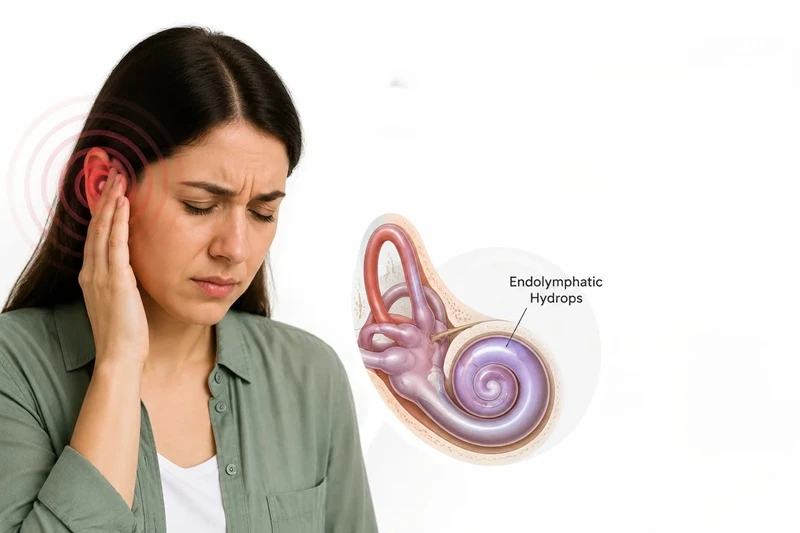
The etiology of Ménière’s disease is unclear, although it is associated with an excess of fluid in the inner ear.
Causes and Risk Factors May Include:
A combination of several causes can work simultaneously to produce symptoms in some people.
Ménière’s disease may occur in attacks of varying severity.
Symptoms May Include:
The vertigo episodes can last from 20 minutes to several hours and strike without warning.
Ménière’s disease can be classified into subtypes based on severity and progression.
Knowing the type of Ménière’s disease helps with treatment planning.
Correctly diagnosing the condition is essential because its symptoms mimic those of many other conditions.
Diagnostic Procedures Are as Follows:
The above tests will enable an ENT specialist to diagnose the disease and measure the level of hearing loss and vestibular dysfunction.
The aims of treatment include managing vertigo attacks, hearing conservation, and enhancing quality of life.
Exercises designed to increase balance and stability.
Types of Exercises
In some refractory cases, the following methods are utilized:
The mode of treatment varies from person to person depending on the nature of symptoms and hearing status.
Failure to treat Ménière’s disease can adversely affect a person’s physical and mental well-being.
Complications May Include:
Treatment will reduce the risk of those complications.
Though Ménière’s disease is not always preventable, controlling the symptoms will minimize the number of attacks that occur.
Preventative Methods:
Maintaining a consistent lifestyle is vital to managing the condition effectively.
Living with this condition is a challenge.
Recommendations for Patients:
Many patients can successfully manage the condition and lead a decent life.
Likita ENT Hospital offers safe and effective Meniere’s Disease Treatment in Patna, Bihar, India, at an affordable cost. Our team of experienced ENT specialists provides accurate ear and balance examination, hearing evaluation, and diagnostic assessment to identify the possible cause of recurring vertigo and assess its effect on hearing and balance. Treatment is tailored according to the frequency and severity of vertigo episodes, hearing changes, tinnitus, ear fullness, and individual patient needs. When required, our ENT specialists can manage associated dizziness, spinning sensations, fluctuating hearing loss, ringing in the ear, ear pressure, nausea, or balance difficulties and recommend suitable medical treatment, lifestyle measures, vestibular rehabilitation, or other treatment options when appropriate. With advanced ENT diagnostic facilities, experienced specialists, and a patient-focused approach, Likita ENT Hospital is committed to providing safe, precise, and comfortable Meniere’s Disease Treatment in Patna, Bihar, India.