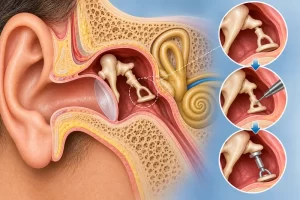
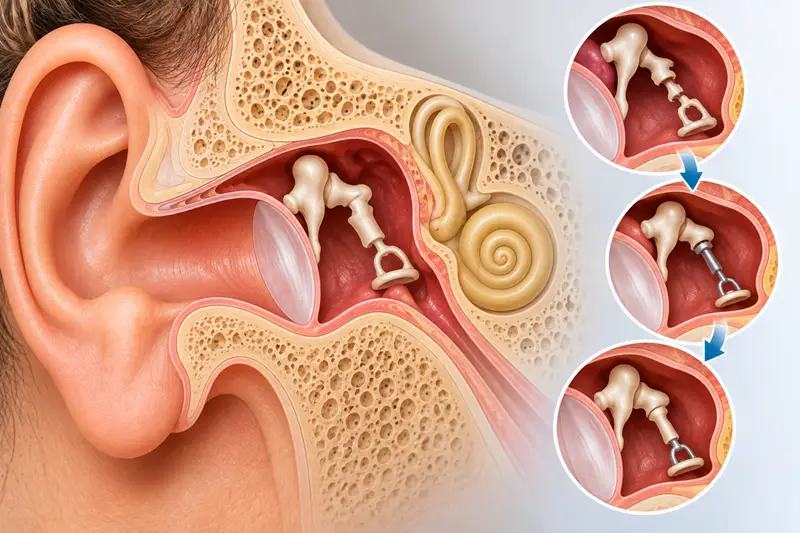
An ossiculoplasty is an advanced microscopic surgical procedure for the ear that involves reconstructing the tiny auditory bones of the middle ear. These three ossicles (malleus, incus, and stapes) have a key function of transmitting sound vibrations from the tympanic membrane to the inner ear. Any injury to these structures may impair hearing and is usually caused by otitis media, head injuries, cholesteatoma, prior ear operations, or congenital conditions.
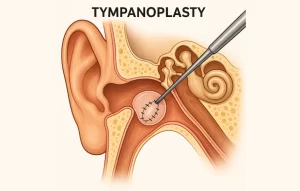
Ossiculoplasty aims to restore the continuity of the ossicles and to provide good hearing and acoustic sound transmission in the middle ear. It is performed either independently or in combination with other ear operations, such as tympanoplasty or mastoidectomy, depending on the severity of the disease.
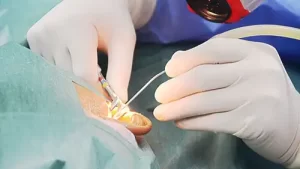
This process is currently performed using highly sophisticated surgical microscopes, endoscopic visualization equipment, and contemporary prostheses that enable maximum possible hearing improvement while avoiding undesirable complications. The surgery has the potential to greatly improve patients’ hearing.
It may be needed in cases where hearing loss is associated with damage or impairment of the middle ear bones.
Early surgical intervention aids healing and prevents further damage to the ears.
Several diseases and disorders can impact the fragile middle ear bones.
Ossicular chain dysfunction disrupts sound transmission and causes hearing impairment.
Patients who require ossiculoplasty have persistent hearing symptoms.
Persistent conductive hearing loss requires evaluation by an ENT specialist.
Correct and timely diagnosis is necessary for further surgery planning.
Tests help determine the extent of ossicular damage.
The operation is usually done using microscopic or endoscopic ear surgery techniques, either under local or general anesthesia.
Various types of prostheses may be considered depending on the extent of ossicular damage.
Minimally invasive procedures help achieve better surgical results and better hearing function.
Recovery after surgery occurs gradually and lasts several weeks.
Hearing will improve gradually after recovery from the surgery.
Ossiculoplasty can effectively improve hearing and restore proper middle ear function.
Patients will be able to hear more clearly and work efficiently.
Although this procedure is usually considered safe, complications may occur during ossiculoplasty.
Postoperative follow-ups will lower the risks of developing such problems.
Almost all patients return home fully recovered and with improved hearing after the surgical procedure.
LIKITA ENT Hospital is a trusted ENT centre for Ossiculoplasty in Patna, Bihar, India, providing specialized treatment for middle ear and ossicular chain disorders. Our experienced ENT surgeons use advanced microscopic and endoscopic ear surgery techniques, modern diagnostic technology, and appropriate ossicular reconstruction prostheses to provide personalized treatment. With a patient-focused approach, the hospital aims to achieve safer ossiculoplasty surgery, effective hearing restoration, smoother recovery, and improved long-term hearing outcomes for patients with conductive hearing loss and middle ear problems.