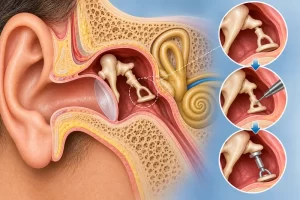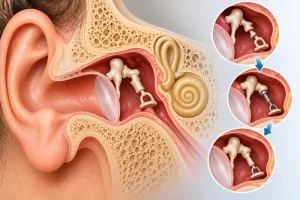
Tympanoplasty is an ear surgery designed to fix a damaged or hole in the eardrum (tympanic membrane) and to repair the tiny bones of hearing, the middle ear, if required. Usually, patients with chronic ear infections, persistent ear discharge, or hearing loss have a traumatic hole in the eardrum.
Because it transfers sound waves from the outer ear to the middle ear, the eardrum is crucial for hearing. With an incomplete or torn eardrum, sound vibrations are limited, increasing the likelihood of recurrent ear infections and hearing loss. Tympanoplasty is the surgical closure of the hole in the eardrum, restoration of hearing, and a means of protecting the ear from further infection.
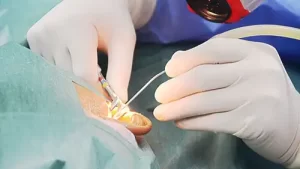
Modern tympanoplasty uses both microscopic and endoscopic surgery. This provides high accuracy, enhanced visualization, and more favorable healing outcomes. The level of the surgery is determined by the extent of the ear’s damage. Some ears are repaired by simply plugging the hole, while in other cases, all middle ear structures must be rebuilt. Tympanoplasty is considered one of the most successful ENT surgical procedures for restoring hearing and enhancing the quality of life.
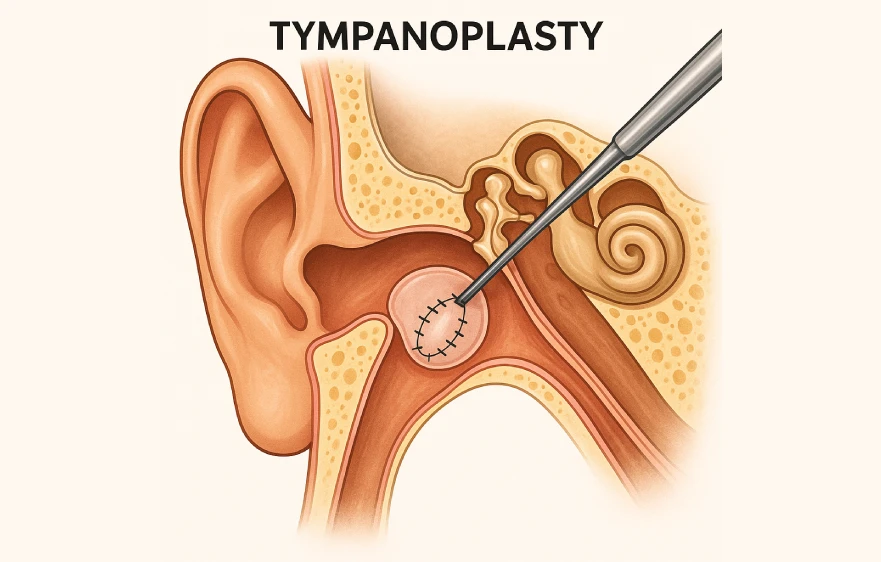
Tympanoplasty is an ear surgery suitable for any patient with eardrum damage or chronic middle ear disease.
The surgical procedure is typically recommended for the following situations:
Surgical intervention helps prevent further progressive hearing loss and complications like recurrent chronic ear infections.
There are many different conditions that can lead to perforation of the tympanic membrane or damage to the middle ear structures:
Patients requiring tympanoplasty surgery usually have a history of chronic ear problems.
Symptoms generally include:
Any ear discharge or hearing loss should be evaluated by a trained ENT surgeon.
Tympanoplasty procedures vary depending on the condition and repair needed:
Before undergoing tympanoplasty surgery, the ENT surgeon will assess the condition of your ear in detail:
Based on these investigations, ENT surgeons can assess the extent of ear damage and determine the most appropriate surgical reconstruction for your specific ear problem.
This ear surgery is usually carried out under local or general anesthesia. Advanced microscopic and endoscopic techniques are typically used during surgery to ensure high precision and favorable outcomes.
The procedure for tympanoplasty is fairly straightforward:
A graft of tissue will typically be taken from elsewhere within your own body, such as from skin from your abdomen, or from cartilage within your ear. Minimally invasive surgical techniques are increasingly used at ENT hospitals to improve precision, reduce recovery time, and enhance healing.
The time required for full recovery varies, with simpler operations taking a few weeks. It’s crucial to properly follow your surgeon’s care instructions:
Hearing continues to improve gradually over weeks and months as the graft is accepted and integrates with your middle ear.
Tympanoplasty offers significant functional and protective advantages for the ear:
Although tympanoplasty is generally a safe procedure, it may occasionally carry risks.
These may include:
It is very important to follow the wound care advice after surgery, as this significantly reduces the risk of complications.
The majority of patients achieve good outcomes after tympanoplasty and can lead normal lives.
Auditory rehabilitation might be required for your condition.
LIKITA Hospital is a trusted ENT Centre for Tympanoplasty in Patna, Bihar, India, providing specialized evaluation and surgical treatment for eardrum perforation, chronic ear infections, middle ear disease, and hearing loss. Our experienced ENT surgeons use advanced microscopic and endoscopic ear surgery techniques, modern diagnostic technology, and appropriate grafting and reconstruction methods based on each patient’s condition. With detailed preoperative assessment, patient-focused surgical care, and dedicated postoperative follow-up, LIKITA Hospital focuses on safe treatment, eardrum repair, hearing improvement, infection control, and long-term ear health.