Palatoplasty is a surgical procedure used for repairing a cleft palate and restoring the anatomical integrity of the roof of the mouth. One congenital defect resulting from a failure of tissue fusion is a cleft palate, which causes a split or gap in the palate. This anomaly may affect the soft palate, hard palate, or both and may cause difficulties with feeding, speech development, hearing, breathing, and facial growth.
A child with a cleft palate experiences several difficulties, including poor suckling, milk regurgitation, recurrent ear infections, hearing loss, delayed speech development, and speech impairment due to excessive nasal sounds. Since the palate is responsible for normal speech development and function, it is necessary to treat this abnormality promptly to facilitate proper development and communication.
With palatoplasty, one can correct a palatal gap, develop clear speech and normal eating habits, minimize nasal leakage, and maintain normal oral cavity function. Besides, it improves middle ear ventilation and reduces the risk of recurrent ear infections and future hearing loss.
Nowadays, palatoplasty aims to improve function and preserve speech. It usually requires a multidisciplinary approach and includes an ENT doctor, speech therapist, audiologist, pediatrician, and rehabilitation specialist.
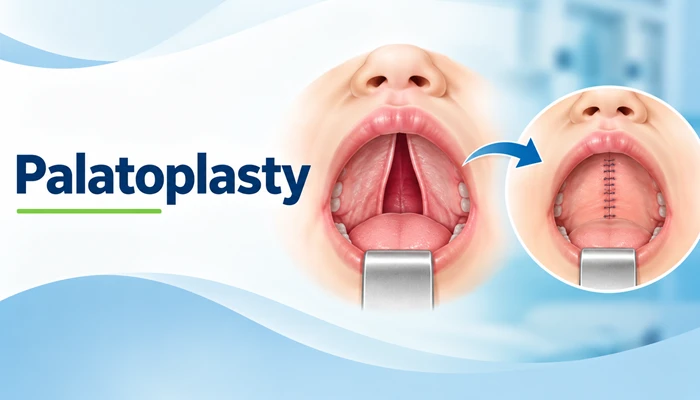
A cleft palate refers to an opening on the roof of the mouth that develops due to a failure of tissue formation before birth.
Types of Cleft Palate Are:
It may develop on its own or in conjunction with a cleft lip.
If the child was born with a cleft palate, it will help resolve issues with speech, nutrition, and other problems related to mouth function.
Common Reasons for cleft palate surgery are:
Surgery supports normal body development and communication skills.
Cleft palate formation occurs during intrauterine development and can have various causes.
The Most Common Causes Include:
In most cases, the exact reason for its development cannot be determined.
Babies born with a cleft palate can have problems with feeding, speaking, and hearing.
Common Symptoms include:
An untreated cleft palate will affect speech and social interaction skills.
A cleft palate is diagnosed at birth or within the first few months after.
Diagnostic Work-Up Consists of:
These examinations aid in planning surgery and rehabilitation.
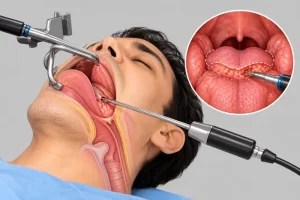
Palatoplasty can be done under general anesthesia with sophisticated reconstructive surgery.
Surgical Procedure Details
Current surgeries aim to improve function and preserve speech.
Objectives of Surgery Include:
Surgical procedure scheduling is done in order to ensure speech development.
Children usually recover from palatoplasty within 1 to 2 weeks.
Post-operative Treatment Consists of:
Some changes in the child’s feeding routine may be required during recovery.
Palatoplasty leads to significant improvement in oral and speech function.
Typical Advantages of Palatoplasty Include:
Palatoplasty is a relatively safe surgical procedure, but complications can occur.
Possible Complications Are:
Well-thought-out surgical procedures and rehabilitation can minimize complications.
Patients who undergo palatoplasty usually require long-term multidisciplinary post-operative care.
Important Care Recommendations Are:
The comprehensive approach to post-operative rehabilitation plays an essential part in patients’ development.
LIKITA ENT Hospital is a trusted ENT centre for Palatoplasty in Patna, Bihar, India, providing specialized evaluation and surgical treatment for cleft palate in children. Our ENT specialists focus on repairing the opening in the palate, restoring palatal muscle function, and supporting improvements in feeding, swallowing, and speech development. With comprehensive preoperative assessment, individualized surgical planning, appropriate surgical techniques, and dedicated postoperative care, LIKITA ENT Hospital aims to support proper palate healing, reduce complications, and promote long-term oral function and overall quality of life. Speech therapy, hearing assessments, and regular follow-up are important parts of the recovery and rehabilitation process.