The back part of the tongue surgery fixes blocked breathing paths. This operation is the best option for ear, nose, and throat medicine, as well as head and neck work. Thick tissue at the rear of the mouth can squeeze airflow when someone sleeps. Breathing gets rough because of the bulky muscle way down there. Every night, loud noises happen because of a narrow throat passage. This is sleep apnea, where the tongue blocks the airway. The following day, you feel exhausted from the lack of proper rest. To fix this, doctors widen that area to improve breathing. Once swelling decreases, a few weeks later, snoring gets better. However, the outcome depends on how much tissue was removed initially. It takes time to heal, similar to a cut in the mouth. Everyone heals differently based on their body’s reaction.
Most nights, when the throat tightens too much, breathing ceases. Usually, the airway is blocked by a big tongue root. People who still struggle after trying weight loss or nightly CPAP masks might want to look deeper. Swollen soft tissues further within the throat are the source of their problem. Sometimes this area is disregarded, but fixing it might help them.
Tissue at the back of the tongue is removed to open up space for breathing during this operation. Air moves more freely once that area opens up a bit. Breathing pathways are less likely to shut down when relaxed at night. People often sleep better afterward without extra noise or interruptions. Sometimes it stands on its own; other times it joins forces with related procedures. Which ones tag along depends entirely on how someone’s throat and nose are shaped inside. Tonsils might come out, too, or work done on the soft palate, the nasal wall, or the nasal passages if needed.
These days, surgeons are trying to make their incisions as small as possible, their airways as clear as possible, and their patients as comfortable and easier to breathe post-op as possible.
Does it work?
Sometimes, it depends on how much care goes into the pre-op checkup and the personalized treatment plan that accompanies it.
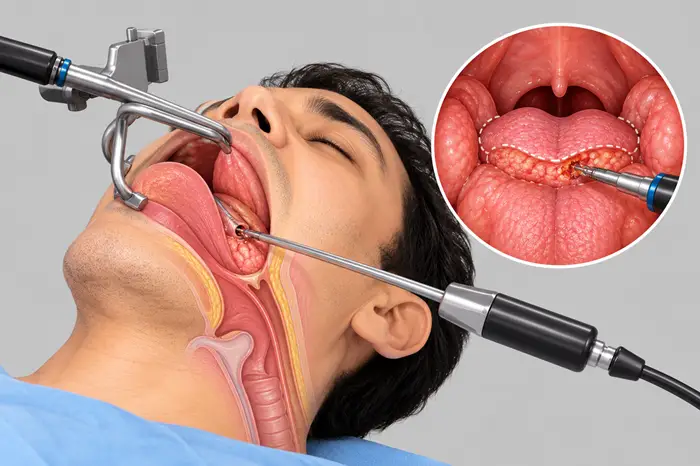
Back toward the throat, the tongue base sits close to where breathing happens. This part forms the rear section of the tongue itself.
Functions of the Tongue Base
An excessive amount of tissue at the back of your tongue may occupy space as you sleep. This congestion may make it harder for air to pass through. When you’re at rest, your breathing tightens.
People who might benefit from tongue base reduction are those with airways blocked by an oversized tongue. It may sound intense, but it only tackles the problematic area. This procedure helps some breathe easier, particularly when lying down. Still, it’s for specific folks whose primary issue is the tongue’s size. The results vary based on the initial severity of the blockage.
Common Indications Include:
Working on the airway opens up more room for breath at night. This change makes nighttime airflow smoother through careful reshaping.
Something swelling or shrinking at the back of the mouth can change how the space opens there. Pressure changes, tissue response, and even muscle position might each play a part. Each bit shifts the balance one way or another. Airway shape alters when those pieces move out of their usual spots.
Common Causes Include:
Checking the airway closely shows where the blockage happens.
Heavy breathing during sleep often occurs in people whose airway is blocked by the back of the tongue.
Typical Symptoms Include:
Breathing problems during sleep, when ignored, can lead to heart issues or trouble managing blood sugar. A person might experience worse health outcomes if these pauses in breathing go unchecked through the night.
A full assessment of breathing and rest patterns must be conducted prior to the procedure.
Diagnostic Evaluation Includes:
Looking into these cases shows where breathing problems are happening and how serious they might be.
Most of the time, the operation occurs while you are fully asleep, thanks to modern methods of managing breathing pathways.
Surgical Procedure Overview
A few small tools can handle the task without deep cuts. Yet tiny instruments often do the job just fine.
Surgical Options Could Include:
These days, new techniques make procedures more accurate while speeding up healing. How treatments have changed keeps surprising many who remember older ways.
How fast someone heals depends on how much surgery they had and the state of their airway.
Postoperative Care Includes:
Healing sometimes brings a sore throat. Trouble going down food might show up. A bit of puffiness can appear, too. These fade as things mend.
Usually, breathing becomes more comfortable after this operation. Sleep quality improves as recovery takes place.
Usually, the benefits would be:
It is quite common to see considerable improvement in the sleep symptoms of most patients post-surgery.
Most people handle Tongue Base Reduction without issues, yet now and then something goes off track. Problems are rare, but they do show up once in a while.
Possible Complications Include:
Skilled hands during surgery make a big difference when keeping the airway safe. Watching breathing closely cuts risks in surprising ways.
Watching things over time helps breathing stay steady night after night. A slow look ahead keeps sleep running more smoothly down the road.
Important Tips for Care
Some individuals may require both types of airway support simultaneously to achieve optimal results.
LIKITA ENT Hospital is a trusted ENT Centre for Tongue Base Reduction Surgery in Patna, Bihar, India, providing specialized evaluation and surgical treatment for obstructive sleep apnea, chronic snoring, tongue base enlargement, and airway obstruction during sleep. Our ENT and head and neck specialists focus on improving airway space through appropriate tongue base reduction techniques while protecting surrounding structures and supporting normal swallowing and speech functions. With comprehensive airway assessment, sleep study evaluation, individualized surgical planning, modern surgical techniques, and dedicated postoperative follow-up, LIKITA ENT Hospital aims to improve nighttime breathing, reduce sleep-related symptoms, support better sleep quality, and enhance overall quality of life.