Surgery on branchial cysts and fistulas is a unique type of ear, nose, and throat (ENT) and head & neck surgery. It involves repairing congenital defects resulting from incomplete closure of the branchial apparatus during fetal development. Branchial cysts and fistulas are neck-related birth defects that occur most often in childhood, adolescence, and early adulthood.
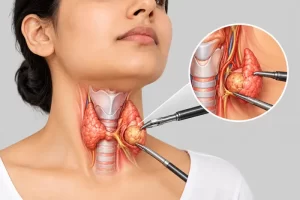
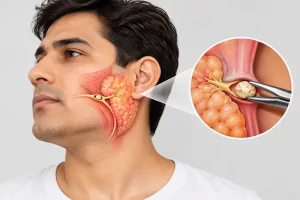
A branchial cyst is a benign fluid-filled swelling, usually in the neck. A branchial fistula is a tube-like structure that connects the skin of the neck to the throat. Both result from incomplete closure of the branchial clefts.
Patients with branchial cysts usually experience a painless swelling on the side of the neck. The swelling grows bigger with time. Some patients develop multiple infections in the same cyst, leading to pain, fever, redness, or fluid discharge. When it comes to branchial fistulas, patients might observe a small hole in the neck with pus discharge.
Surgery is considered the definitive treatment method for treating branchial cysts and fistulas by ensuring complete removal of the lesion and fistulous tract to prevent further occurrence. In addition, modern surgical practices include accurate dissection, scar management techniques, and nerve and vessel protection.
Proper assessment and early surgical intervention help prevent complications and achieve better clinical outcomes.
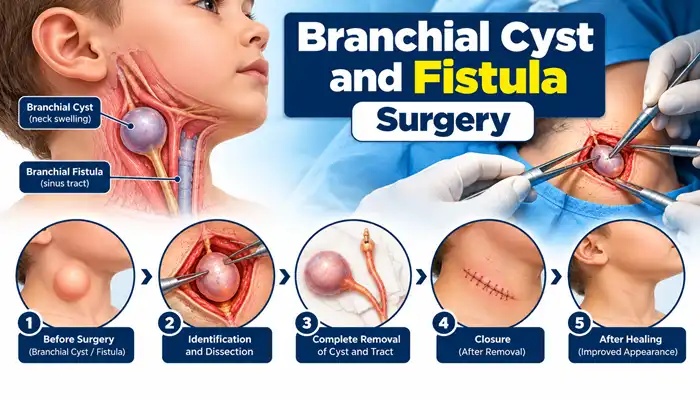
Branchial cysts and fistulas are congenital anomalies associated with improper development during fetal life.
• Branchial Cyst: A fluid-filled structure typically found on the lateral aspect of the neck. • Branchial Fistula: An abnormal tract that connects internal structures to the outer surface of the skin. • Such lesions occur along the lateral neck, close to the jaw or throat.
Surgery is performed on individuals with a branchial cyst or fistula.
Common Reasons for Surgical Intervention:
• Presence of neck swelling • Swelling of the neck with infection • A fistula with pus discharge from the neck • Growing neck lesion • Cosmetic reasons • Painful neck mass • Inflammation
Removal of the affected area prevents recurrent infections.
They are considered congenital malformations.
Common Causes of Branchial Cyst and Fistula include:
They are unrelated to infections or lifestyle habits.
The size and state of the lesion determine the symptoms.
Common Symptoms of Branchial Cyst and Fistula Include:
Some branchial cysts stay asymptomatic until infection occurs.
Diagnosis is crucial to determine before proceeding to surgery.
Diagnosis for Branchial Cyst and Fistula Includes the Following:
The diagnosis helps determine the extent and location of the lesion.
The surgery procedure is done under general anesthesia with the use of the head & neck surgery technique.
Steps of the Surgical Procedure
A total excision of the lesions will lower the risk of recurrence.
Advanced surgical procedures focus on achieving minimal scarring and a safe excision of the lesion.
Most people take a recovery period of about one or two weeks following surgery.
The post-operative care involves:
Temporary swelling or discomfort of the surgical area may occur.
This surgery provides a good and lasting cure.
Some Common Advantages Include:
Most people achieve excellent results after their surgical removal is complete.
There are certain possible risks associated with the operation.
Complications that can occur include:
Surgical skill can help avoid such complications.
Proper follow-up ensures optimal recovery and healing.
Helpful Tips in Post-operative Care:
The majority of patients recover perfectly after surgery and resume their routine work.
Last Updated: October 12, 2026
LIKITA ENT Hospital is a trusted ENT Centre for Branchial Cyst and Fistula Surgery in Patna, Bihar, India, providing specialized evaluation and surgical treatment for congenital neck cysts, branchial fistulas, recurrent neck infections, persistent neck swelling, and abnormal discharge from fistulous tracts. Our experienced ENT and head and neck surgeons use detailed clinical examinations, appropriate imaging, and precise surgical techniques to identify and remove branchial cysts and fistulous tracts while protecting nearby nerves, blood vessels, and surrounding tissues. With comprehensive diagnosis, individualized surgical planning, careful wound management, and dedicated postoperative follow-up, LIKITA ENT Hospital focuses on treating congenital neck abnormalities, reducing recurrent infections, minimizing scarring, supporting recovery, and improving long-term patient outcomes.