Salivary gland stone extraction is a medical procedure performed to remove salivary stones from affected salivary glands. A salivary stone is defined as a mineral accumulation that blocks the natural flow of saliva within a salivary gland and its ducts. Salivary stones usually occur in the submandibular glands, which are situated under the jawbones, but may also affect other salivary glands, such as the parotid and sublingual glands.
When the flow of saliva is obstructed, symptoms such as pain, swelling, infections, dehydration, difficulty eating, and recurrent inflammation of the affected salivary gland may develop. The problems will increase when one eats, as the glands work hard to produce saliva despite their difficulties. A neglected problem can lead to an infection, an abscess, damage to a salivary gland, and constant discomfort.
Removal of salivary stones aims to allow free flow of saliva, ease pain and swelling, maintain healthy salivary glands, and prevent infections. There are different procedures for removing salivary stones depending on their size and position within the salivary glands. Presently, there is greater concern for gland preservation, reduced pain, accurate stone removal, and a speedy recovery from the condition.
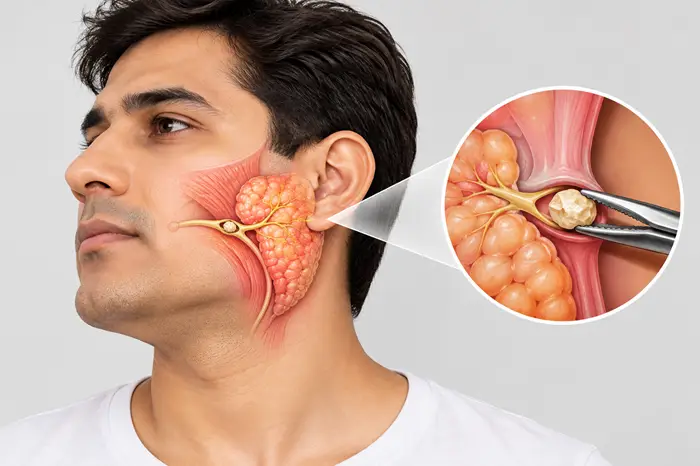
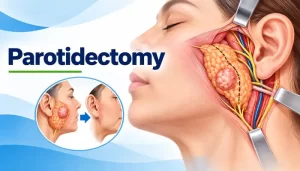
Specialized glands called salivary glands produce saliva to lubricate the mouth and facilitate digestion.
Types Of Major Salivary Glands Are:
Saliva contributes to mastication, swallowing, speech formation, and dental hygiene.
Salivary gland stones consist of calcified salts and other minerals. These stones form within the glands or their ducts.
Important Points about Salivary Stones:
There is only one salivary stone present in a patient, or many of them.
Salivary gland stone removal is performed when obstruction of a salivary gland causes discomfort.
Reasons For The Procedure Include:
The procedure improves salivary gland function.
Some factors can cause stones.
The common causes include:
Thickened saliva in the submandibular gland results in an increased chance of stone formation.
Most patients experience pain and swelling due to obstruction of the salivary passage.
Symptoms Experienced Include:
Patients tend to experience worsening symptoms during meals due to increased salivation.
Before deciding on treatment options, an accurate diagnosis must be made.
Tests Performed Are:
Treatment methods depend on the stone’s size and position.
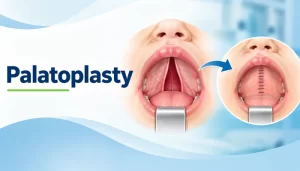
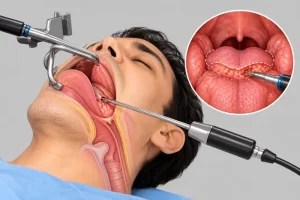
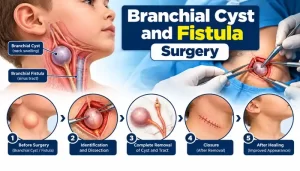
Some Common Treatment Procedures Are:
Contemporary medical approaches emphasize preserving healthy gland activity wherever feasible.
Patients typically recover rapidly after the procedure.
Methods Used in the Recovery Process Are:
Swelling or mild discomfort may happen in the early postoperative period.
This process effectively addresses any issues arising due to gland blockage.
Some of the Common Benefits Include:
Almost all patients recover considerably following surgery.
Salivary stone removal is generally safe, but there are some risks.
Potential Complications May Include:
Expert surgical procedures are essential for preventing such problems.
Adhering to some care instructions will help prevent recurrence.
Here Are Some of the Precautions:
A quick response to health conditions will prevent the damage.
Last Updated: October 16, 2026
LIKITA ENT Hospital is a trusted ENT Centre for Salivary Gland Stone Removal in Patna, Bihar, India, providing specialized evaluation and treatment for salivary gland stones, blocked salivary ducts, painful gland swelling, and recurrent salivary gland infections. Our ENT and head and neck specialists focus on accurate stone removal while preserving healthy salivary gland function whenever medically possible. With comprehensive diagnostic evaluation, individualized treatment planning, modern techniques such as sialendoscopy, and dedicated postoperative follow-up, LIKITA ENT Hospital aims to relieve pain and swelling, restore saliva flow, reduce the risk of recurrent infections, and support a comfortable recovery.