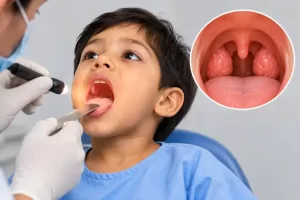
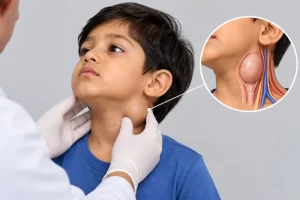
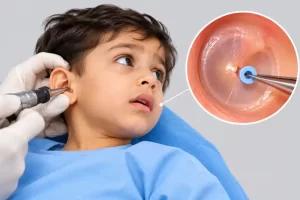
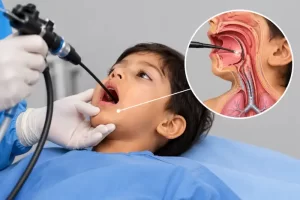
Adenoidectomy is a commonly performed pediatric ENT surgery that aims to remove the child’s enlarged or infected adenoids. Adenoids are small lymphatic tissues located in the back of the throat, above the palate. The adenoids, along with the tonsils, help prevent infections; however, they tend to become smaller with age. If adenoids grow and remain enlarged into later childhood, they may block breathing, interfere with sleep or hearing, or trigger persistent infections, leading to many other medical problems. Enlarged adenoids can cause nasal airway obstruction, mouth breathing, snoring, sleep disturbances, nasal blockage, recurring ear infections, hearing issues, altered speech quality, and sleep apnea. Some children with chronically enlarged adenoids due to the constant nasal airway blockage caused by chronic mouth breathing may even suffer from poor facial growth patterns or chronic sinus infections.
The adenoidectomy procedure is performed to improve nasal breathing, enhance the child’s sleep quality, and improve hearing and speech. This process is frequently carried out under general anesthesia, using minimally invasive surgical techniques and modern instruments, through the mouth, so there is no external scar. This surgical procedure can also be performed simultaneously with a tonsillectomy and/or the insertion of a ventilation tube in the ear for multiple middle ear problems. The main objectives in modern pediatric ENT surgery are safe surgery, rapid recovery, and long-term results.
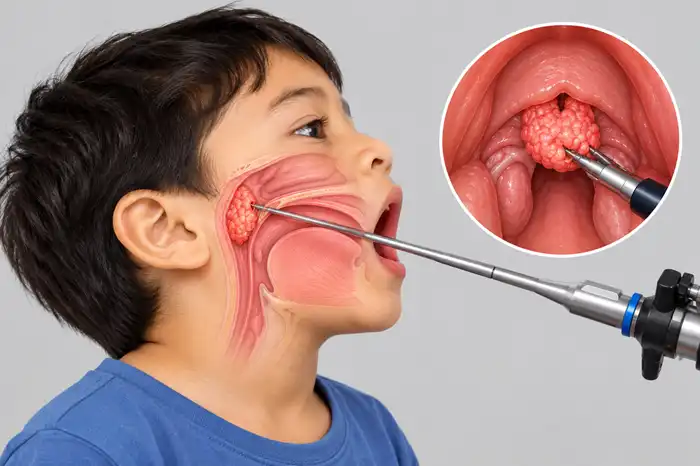
The adenoids consist of lymphoid tissues that lie above the throat and behind the nose. The main functions of the adenoids include:
Adenoids are at their largest during childhood and normally shrink with age.
Adenoidectomy surgery may be recommended in children with enlarged or chronically infected adenoids that cause one or more medical problems.
Indications include:
Children with significant upper airway obstruction, chronic infections, or the above conditions may greatly benefit from surgery.
Various conditions can cause the adenoids to become enlarged or infected:
Some children naturally have large adenoids that create an obstruction.
Children with enlarged adenoids often exhibit a variety of breathing, sleeping, and ear-related signs:
Persistent obstruction of the nasal airway can affect overall health, sleep quality, growth, and facial structure.
An ENT consultation with the child is mandatory prior to performing an adenoidectomy.
Diagnostic work-up can include:
The diagnostic work-up helps the doctor in quantifying the severity of adenoid enlargement and its effects.
Adenoidectomy is a very safe procedure commonly performed under general anesthesia, employing modern instruments for the best outcomes:
Surgical Procedure Outline
The surgical techniques used are described below:
These methods enable greater precision in surgical intervention and minimal blood loss.
Children recover from the surgery and go back to their normal routine within a few days:
Postoperative Care:
Mild discomfort in the throat and nasal area, along with altered nasal speech, may be observed during this recovery period.
Children who undergo adenoidectomy often exhibit improvement in their various signs and symptoms, such as:
Overall health and physical well-being are commonly enhanced after an adenoidectomy.
Adenoidectomy is generally considered a safe procedure, but as with any surgery, there are certain associated risks and complications that can arise.
Possible complications include:
The potential for these risks and complications can be minimized by having an expert surgeon and adequate preoperative and postoperative care.
Children generally recover quickly and lead a normal, healthy life after surgery.
Advice and precautions:
The long-term changes observed after surgery include improved airflow, better sleep quality, increased breathing efficiency, and reduced risk of future ear infections.
LIKITA ENT Hospital is a trusted ENT Centre for Pediatric Adenoidectomy in Patna, Bihar, India, providing specialized evaluation and surgical treatment for enlarged adenoids, chronic nasal blockage, mouth breathing, snoring, sleep apnea, and recurrent ear infections in children. Our ENT specialists focus on safely removing enlarged or infected adenoid tissue while supporting healthy nasal breathing, better sleep quality, and improved ear function. With comprehensive pediatric ENT evaluation, individualized surgical planning, modern surgical techniques, and dedicated postoperative follow-up, LIKITA ENT Hospital aims to minimize complications, support comfortable recovery, and improve children’s breathing, sleep, and overall quality of life.