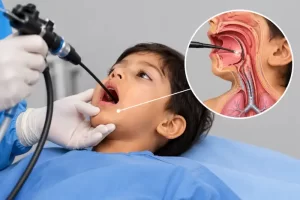
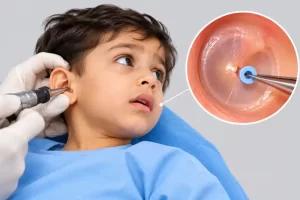
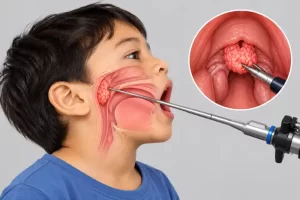
The surgical excision of neck masses is among the most commonly performed procedures for treating neck masses in young patients. These abnormal masses that occur in children can be caused by a number of factors, including congenital issues, infections, swollen lymph nodes, cystic conditions, vascular abnormalities, and others. Some masses may be non-harmful, but others may be enlarged, prone to recurrent infections, or interfere with respiratory or feeding processes.
These masses may arise from congenital causes, such as thyroglossal duct cysts, lymphangiomas, branchial cysts, dermoid cysts, or infections that cause lymph node enlargement, among others. Some of these masses might pose not only health risks but also aesthetic or functional issues for young patients.
Neck mass excision enables an ear, nose, and throat surgeon to surgically remove the mass and investigate its nature through pathology. The procedure helps prevent further complications, avoid recurrence, and restore normal physiological function and aesthetics of this area. Modern techniques of pediatric ENT surgery ensure a safe excision, avoiding damage to adjacent nerves and blood vessels.
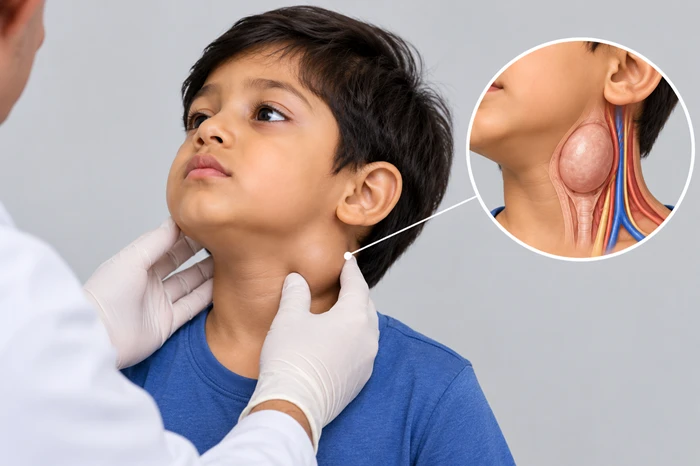
A neck mass is an abnormal lump in the neck.
Neck Masses in Children Can Include:
Some children may be born with neck masses; others can develop later in life due to infections.
The condition should be excised if the patient complains of a persistent neck mass, recurrent infection, an enlarged neck lump, difficulty in swallowing or breathing, cosmetic problems, neck pain, or a possible malignant tumor.
Indications for Removal Include:
Evaluation of cases will determine whether they require surgical intervention.
The symptoms children have depend on whether the neck mass is benign or malignant.
Some of the Common Symptoms Include:
Some children may have painless neck masses that may continue to enlarge without showing other symptoms.
It is crucial to make an accurate diagnosis before carrying out neck mass excision.
Tests for Diagnosis Include:
These tests will allow for the identification of the type, location, and size of the neck mass.
The operation is usually performed under general anesthesia, using specialized pediatric ENT surgical techniques.
Key Steps of the Neck Mass Excision Surgery
It will be determined by the nature and localization of the neck lesion.
Advances in surgery, combined with new technologies and instruments, make procedures safer and more aesthetically appealing.
The majority of children recover from surgery in 1 to 2 weeks.
After Surgery, Children Require:
Some discomfort or swelling in the post-surgical area might develop during recovery.
There are many benefits for the patient’s health and appearance.
They Might Include:
Successful results are common among early patients.
Neck mass excision is usually safe; however, complications can occur.
Potential Risks May Include:
Pediatric ENT surgeons’ skills greatly reduce such risks.
It is vital to get regular follow-up after any surgical procedure.
Some Tips to Remember:
The vast majority of children fully recover and resume all normal activities once healed.
LIKITA ENT Hospital is a trusted ENT Centre for Pediatric Neck Mass Excision in Patna, Bihar, India, providing specialized evaluation and surgical treatment for neck cysts, thyroglossal duct cysts, branchial cleft cysts, enlarged lymph nodes, dermoid cysts, and other neck masses in children. Our ENT and head and neck specialists focus on accurate diagnosis and careful removal of abnormal tissue while protecting surrounding nerves, blood vessels, and other important structures. With comprehensive pediatric ENT evaluation, appropriate diagnostic imaging, individualized surgical planning, modern surgical techniques, and dedicated postoperative follow-up, LIKITA ENT Hospital aims to minimize complications, support recovery, reduce the risk of recurrence, and improve children’s neck function and overall well-being.