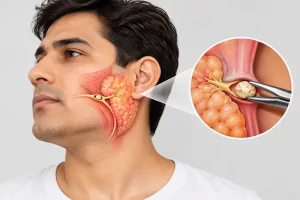
Parotidectomy is a surgical procedure to remove all or part of the parotid gland in patients with parotid tumors, infections, cysts, or other conditions affecting the salivary glands. Parotid glands are large salivary glands found on each side of the face, behind and under the ears. The salivary glands secrete saliva, which helps in digestion, oral hygiene, and swallowing.
Disorders of the parotid glands can result from benign or malignant tumors, recurrent infection, salivary gland obstruction, cysts, or an inflammatory condition. Swelling in the jaw or ear area, facial pain, recurring infection, or slowly growing lumps around the gland are common signs of parotid gland disorder. While the majority of parotid tumors are benign, their surgical removal is still necessary since some could be malignant or cause damage to surrounding body parts.
During parotidectomy, the affected gland tissue is removed, and, whenever possible, the facial nerve is preserved. This nerve runs across the parotid gland and innervates the facial muscles that enable movement during speech or smiling. New technology makes parotidectomy surgery more precise and safe nowadays.
Parotidectomy is a high-efficiency procedure for treating tumors and chronic conditions of the salivary glands, performed by experienced ENT specialists and head & neck surgeons.
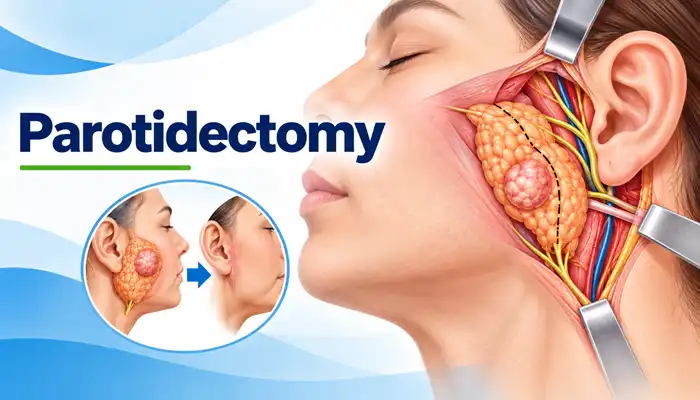
Among the salivary glands is the parotid gland, found on both cheeks near the ears.
Functions of the Parotid Glands Are as Follows:
Well-functioning salivary glands are important for oral and digestive health.
Patients with serious problems associated with the parotid gland may require parotidectomy.
Indications for Parotidectomy Can Be:
The operation removes diseased tissue and prevents further progression of the condition. Types of Parotidectomy.
The approach varies based on tumor size, location, and the pathology involved.
People with parotid disease may present with different symptoms affecting the face and the neck.
Common Symptoms:
Not all parotid masses are painful and grow slowly.
A proper evaluation is key before planning any parotid surgery.
Diagnostic Evaluation:
These tests will aid in determining the kind of parotid pathology.
Parotid surgery is done under general anesthesia with the help of the latest head and neck surgery techniques.
Surgical Procedures Involved
The current surgeries focus on nerve preservation, minimal scarring, and safe tumor removal.
Some of the sophisticated techniques in surgical operations may include:
Recovery occurs slowly over one to two weeks after surgery.
Aftercare Methods Include:
It is normal for swelling or stiffness of the face to develop during recovery.
Parotidectomy effectively treats disorders of the salivary glands.
Common Benefits Are:
Most patients feel significant changes following their surgery and recuperation.
Parotidectomy is a relatively safe procedure, yet there are some risks associated with this operation.
Potential Complications May Include:
Careful surgical management reduces the risk of adverse health effects.
Follow-up care plays an important role after parotidectomy.
Essential Post-Op Care Tips Are:
Most patients enjoy complete recovery with good aftercare.
LIKITA ENT Hospital is a trusted ENT Centre for Parotidectomy in Patna, Bihar, India, providing specialized evaluation and surgical treatment for parotid gland tumors, cysts, recurrent infections, and other salivary gland disorders. Our ENT and head and neck specialists focus on precise removal of affected gland tissue while preserving the facial nerve whenever medically possible. With comprehensive diagnostic evaluation, individualized surgical planning, modern surgical techniques, and dedicated postoperative follow-up, LIKITA ENT Hospital aims to support safe tumor removal, minimize complications, promote recovery, and improve facial comfort and quality of life.