Thyroid removal surgery, medically known as thyroidectomy, is a surgical procedure to remove part or all of the thyroid gland when certain thyroid conditions require surgical treatment. The thyroid is a butterfly-shaped gland located at the front of the neck that produces hormones responsible for regulating metabolism, energy use, body temperature, growth, and other important bodily functions. Depending on the underlying condition, a surgeon may remove one part of the gland or the entire thyroid.
Thyroid removal surgery may be recommended for thyroid nodules, multinodular goitre, thyroid cancer, suspicious thyroid growths, or an overactive thyroid that cannot be adequately controlled with other treatments. Surgery may also be considered when an enlarged thyroid gland causes pressure on nearby structures, resulting in difficulty swallowing or breathing. The extent of surgery depends on the diagnosis, the size and location of the abnormality, test results, and the patient’s overall health.
Some patients require removal of only one thyroid lobe, while others may need a total thyroidectomy. The surgical plan is determined after a detailed evaluation, which may include thyroid function tests, ultrasound imaging, fine needle aspiration cytology, and other investigations when necessary.
Modern thyroid removal surgery focuses on carefully removing the affected thyroid tissue while protecting important surrounding structures, including the nerves responsible for voice production and the parathyroid glands that regulate calcium levels. Appropriate surgical planning, careful technique, and postoperative monitoring help support recovery and reduce the risk of complications.
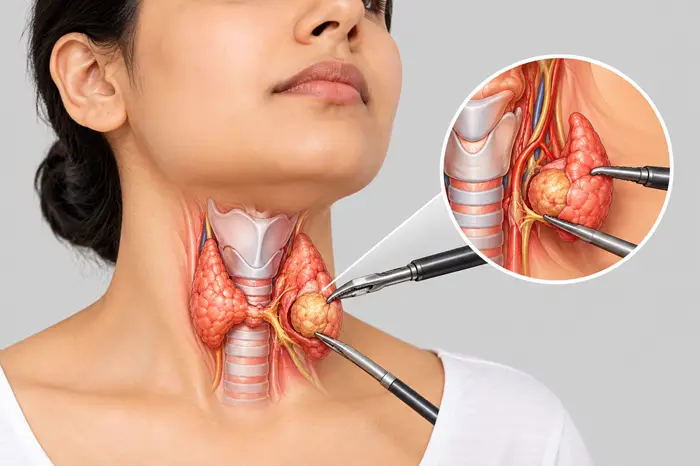
The thyroid gland is a small, butterfly-shaped endocrine gland located at the front of the neck. It produces hormones that help regulate several essential body functions.
The thyroid helps control metabolism, energy, mood, and body temperature.
The thyroid plays an important role in maintaining the body’s normal functioning. When thyroid disorders cause significant symptoms or require surgical treatment, thyroid removal may be considered.
Thyroid removal surgery may be recommended when a thyroid condition causes significant health problems, produces pressure symptoms, or requires treatment that cannot be adequately managed through other approaches. The decision depends on the nature of the thyroid disorder and the results of clinical investigations.
Common Indications Include:
The severity of symptoms, imaging findings, thyroid hormone levels, and biopsy results may influence the decision to proceed with surgery. The treating specialist evaluates these findings to determine whether thyroid removal is appropriate and how much of the gland needs to be removed.
Hemithyroidectomy
One lobe of the thyroid gland is removed during this procedure. It may be considered when the condition is limited to one side of the gland and the clinical findings support partial removal.
Total Thyroidectomy
The entire thyroid gland is removed. This procedure may be recommended for certain thyroid cancers, extensive thyroid disease, or selected cases of hyperthyroidism and multinodular goitre.
Near-Total Thyroidectomy
Almost all thyroid tissue is removed while a small amount may be preserved when appropriate. The choice depends on the underlying condition and the surgical plan.
The type of thyroidectomy is selected according to the diagnosis, the extent of thyroid involvement, and the patient’s individual treatment needs.
Patients who may require thyroid removal surgery can experience symptoms related to thyroid enlargement, pressure on nearby structures, or changes in hormone production.
Typical Symptoms Include:
Some thyroid nodules do not cause noticeable symptoms and may be discovered during a routine examination or imaging test. Further evaluation helps determine whether monitoring, medical treatment, or surgery is appropriate.
A comprehensive assessment is important before planning thyroid removal surgery. The diagnostic process helps identify the underlying condition, assess thyroid function, and determine the appropriate surgical approach.
Included in the diagnostic evaluation are:
These investigations help establish the nature and extent of the thyroid condition and support individualized treatment planning.
Thyroid removal surgery is generally performed under general anesthesia. The surgeon uses an approach suited to the patient’s condition, the size of the thyroid gland, and the extent of tissue that needs to be removed.
Surgical Procedure Overview
Modern thyroid surgery emphasizes precise tissue removal, protection of the structures responsible for voice and calcium regulation, and careful wound closure.
Advanced surgical support may include:
The surgical technique is chosen according to the patient’s condition, and appropriate monitoring is used to support safety throughout the procedure.
Recovery varies depending on the extent of surgery, the patient’s overall health, and whether any complications occur. Many patients resume light daily activities within a relatively short period, although complete recovery may take longer.
Postoperative Care Includes:
Mild throat discomfort, temporary neck swelling, or changes in voice may occur during recovery. Patients should follow their surgeon’s instructions and seek prompt medical attention for rapidly increasing neck swelling, breathing difficulty, or significant swallowing problems.
Thyroid removal surgery can provide effective treatment for selected thyroid conditions when surgery is medically indicated.
Common Benefits Include:
The expected benefits depend on the underlying thyroid condition, the extent of surgery, and the patient’s response to treatment.
Thyroidectomy is commonly performed, but like any operation, it carries potential risks. These vary depending on the extent of surgery, the underlying condition, and individual patient factors.
Possible Complications Include:
Careful surgical planning, appropriate techniques, and postoperative monitoring help identify complications and support timely management.
Long-term follow-up is important after thyroid removal surgery, particularly when the entire thyroid gland has been removed or when surgery was performed for thyroid cancer.
Crucial Tips for Care
Patients who undergo thyroid removal for thyroid cancer may require additional specialist follow-up, investigations, or further treatment depending on their diagnosis and pathology results.
LIKITA ENT Hospital is a trusted ENT Centre for Thyroidectomy (Thyroid Removal Surgery) in Patna, Bihar, India, providing specialized evaluation and surgical treatment for thyroid nodules, goitre, suspicious thyroid growths, thyroid cancer, and selected cases of hyperthyroidism. Our ENT and head and neck specialists focus on precise removal of affected thyroid tissue while protecting important structures, including the nerves responsible for voice production and the parathyroid glands whenever medically possible. With comprehensive diagnostic evaluation, individualized surgical planning, modern surgical techniques, and dedicated postoperative follow-up, LIKITA ENT Hospital aims to support effective treatment, minimize complications, promote recovery, and improve patients’ quality of life.